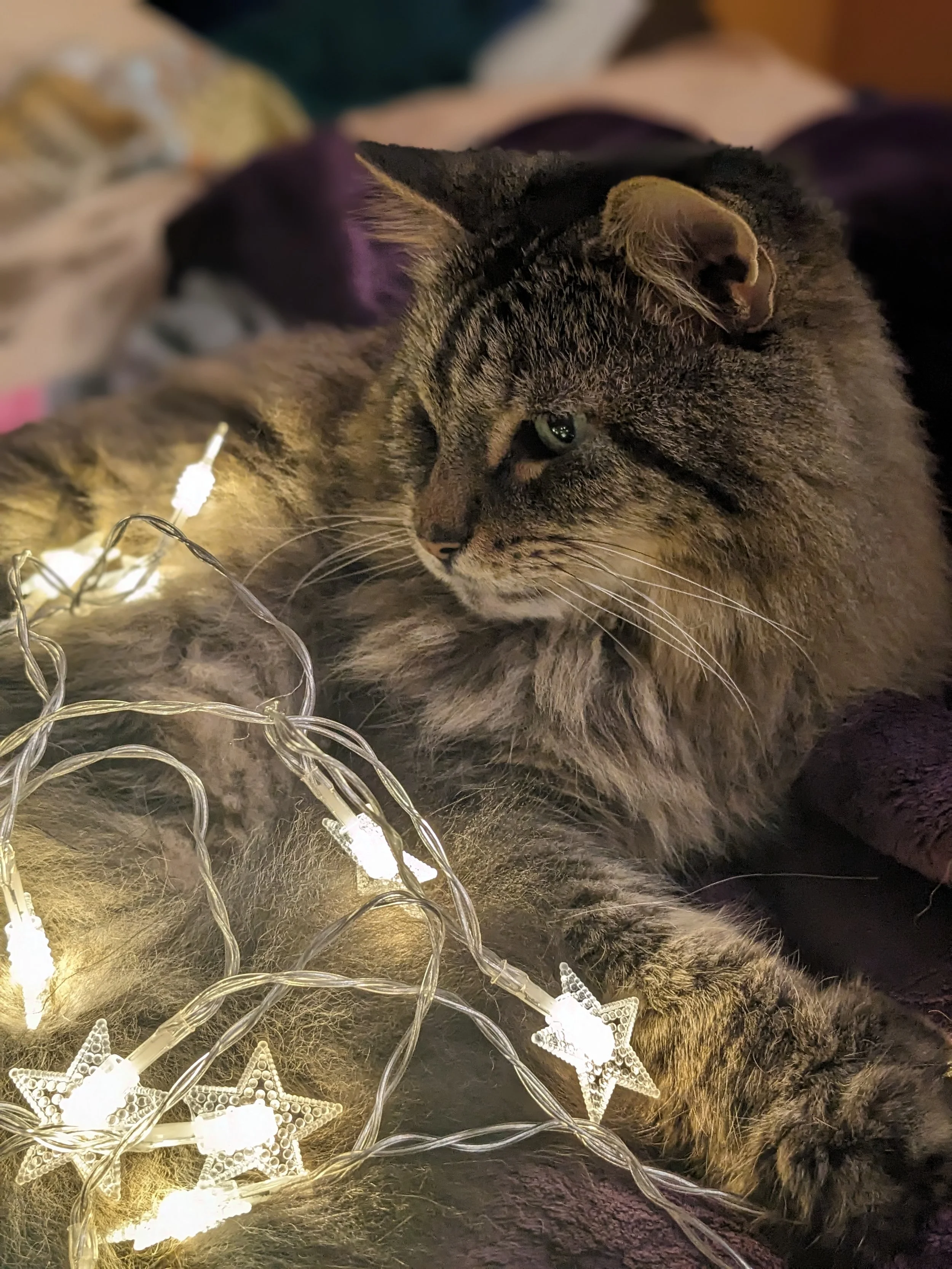
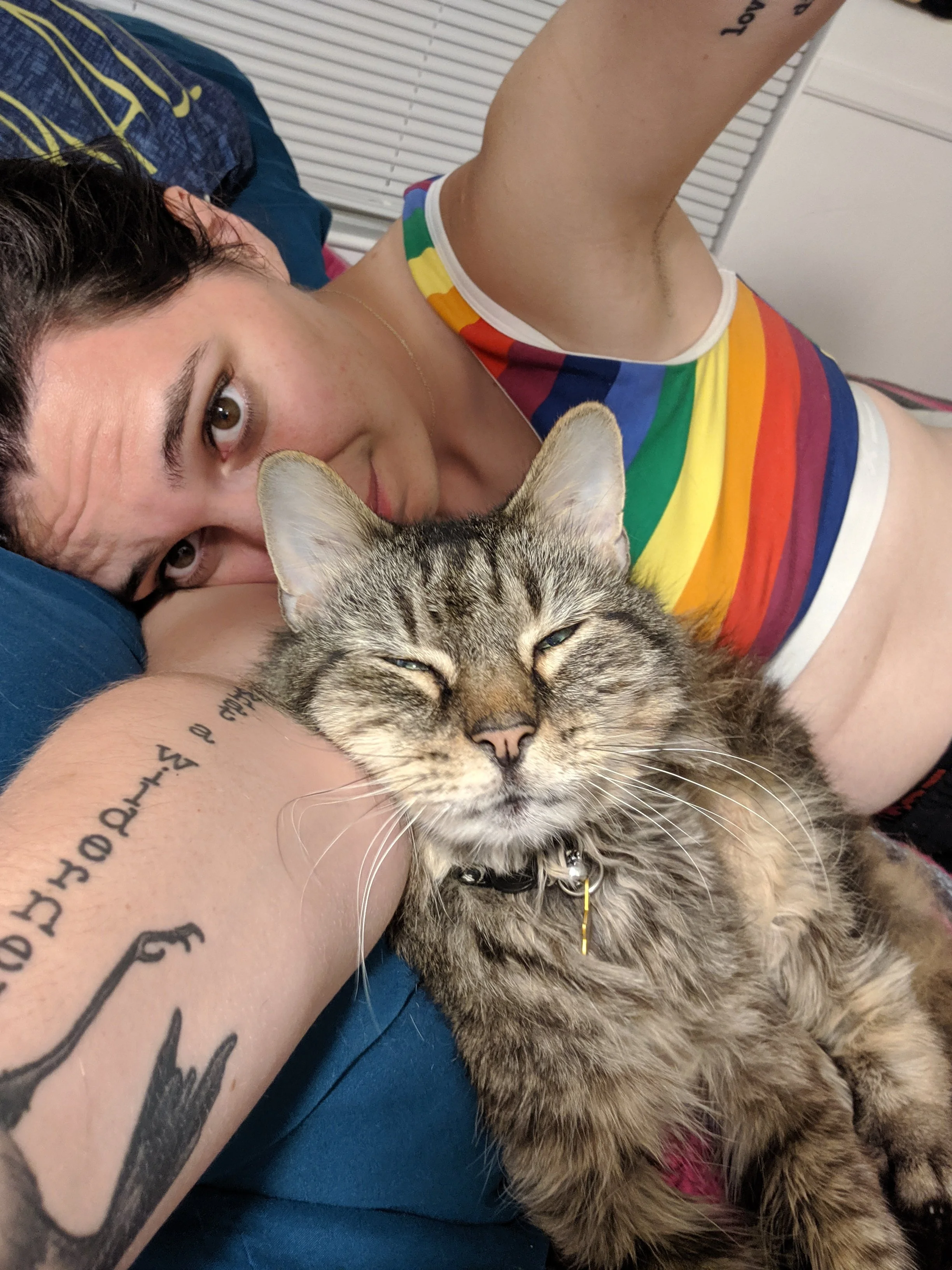
Finnick & Suicide Prevention
Content Note: We are going to discuss our experience regarding two suicide attempts that stopped before they started. This piece will also discuss chronic suicidal ideation, queerness, religious trauma, and other related topics. The sections that discuss the suicide attempts directly will be clearly marked. Take care of yourself. Love you - Max
https://www.inclusivetherapists.com/crisis
https://mindhulplijn.nl/
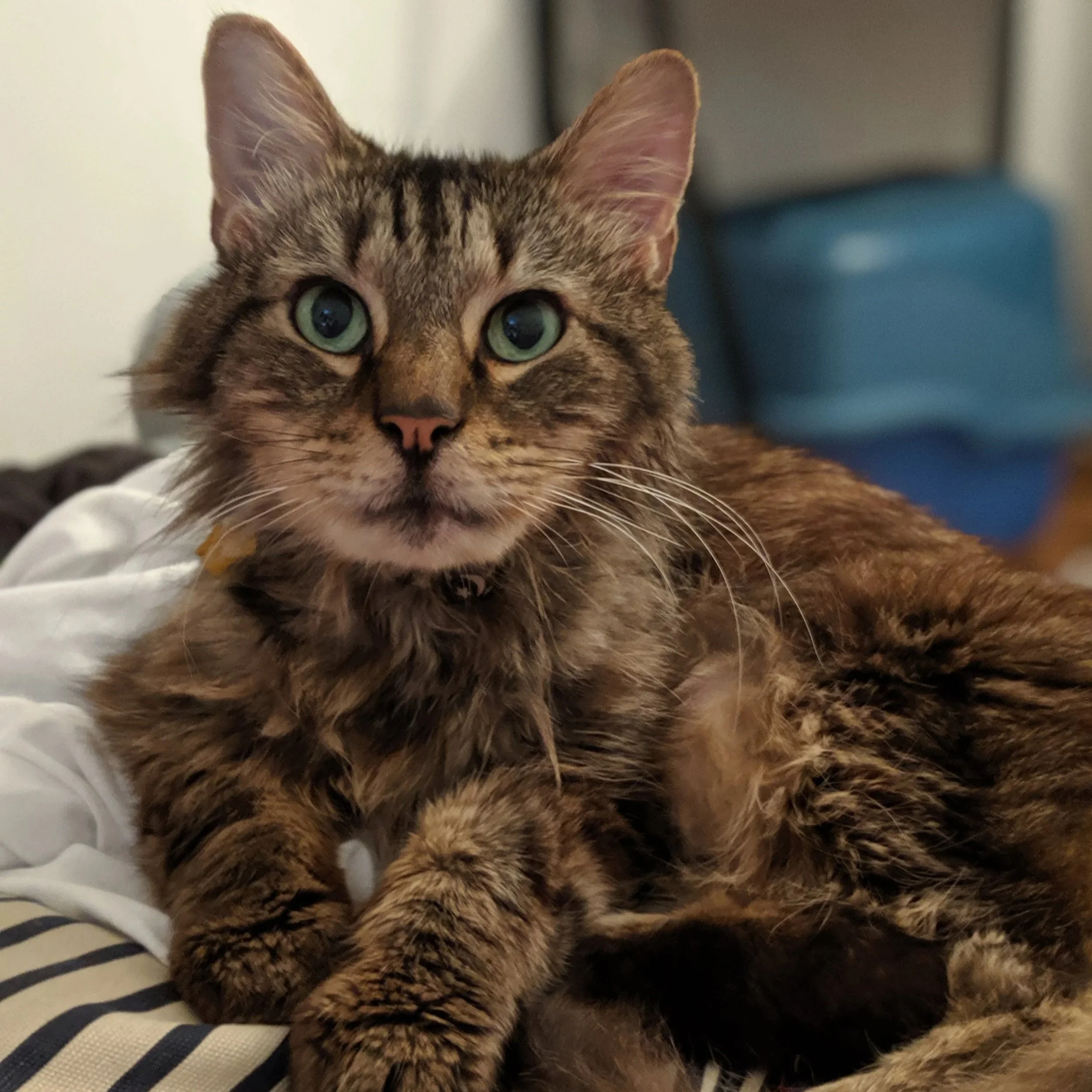
This is Finnick Odair
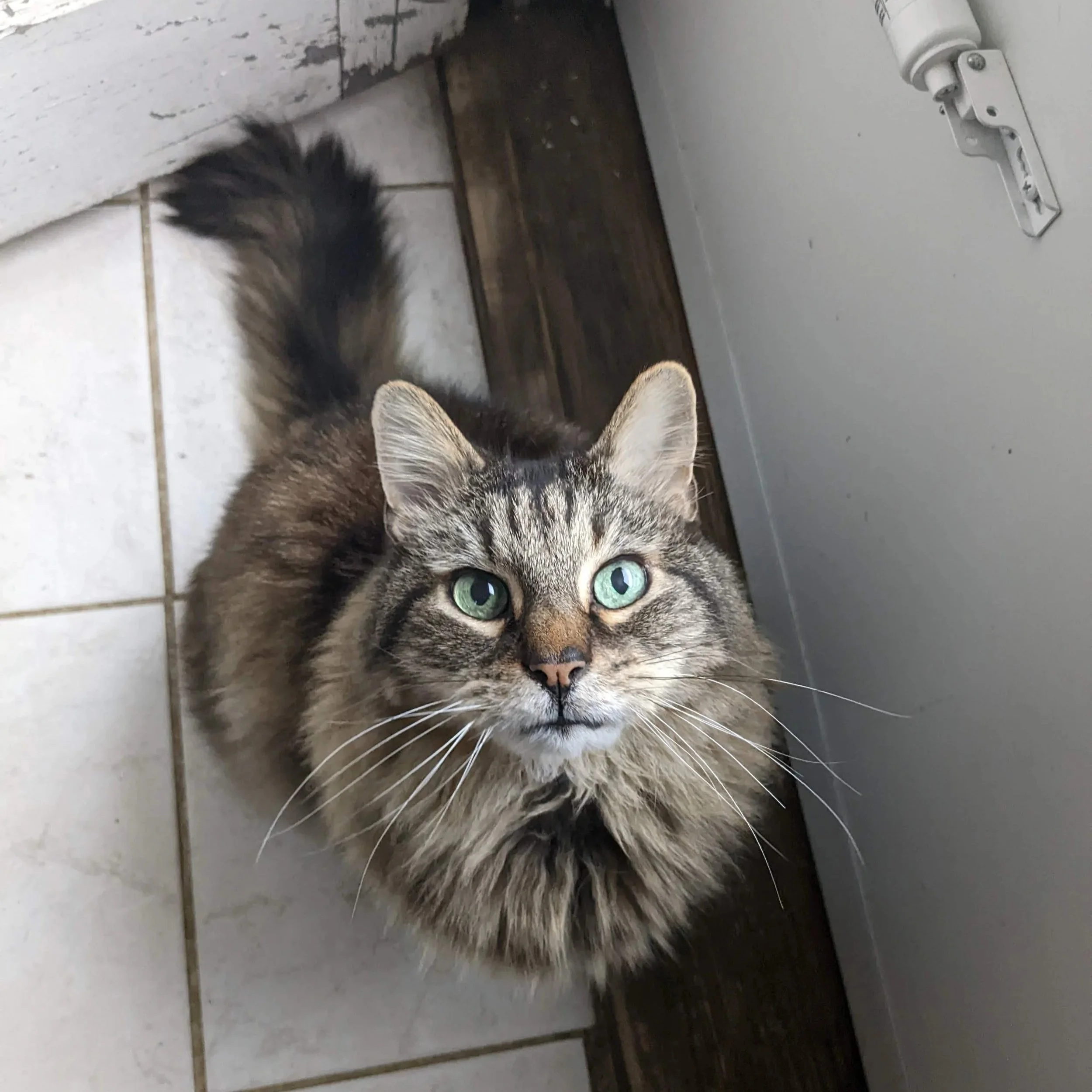
Yes, he is also a cat.
I promise, The Dogs Who Raised Me will eventually talk about dogs, but since September is suicide prevention month, we need to talk about Finnick and why - in my experience - pet loss can be so destabilizing.
When I read about pet loss: other people’s experiences, psychology articles, veterinary practices, social media - I recognize the grief. I recognize the absence of someone I’ve lived with for years. I recognize missing the sound of them, or the feel of their fur under my fingers.
I recognize the disenfranchisement: the social environment hesitant to accept grief and mourning anyway- much less over “just a pet.” I’ve seen discussions on caregiver burnout and the guilty relief when a pet’s time comes, and the heartbreaking choices regarding behavioral euthanasia.
What I haven’t seen discussed as much, is the loss of not just a relationship, but also of the key partner in coping strategies I didn’t even realize we were engaging in.
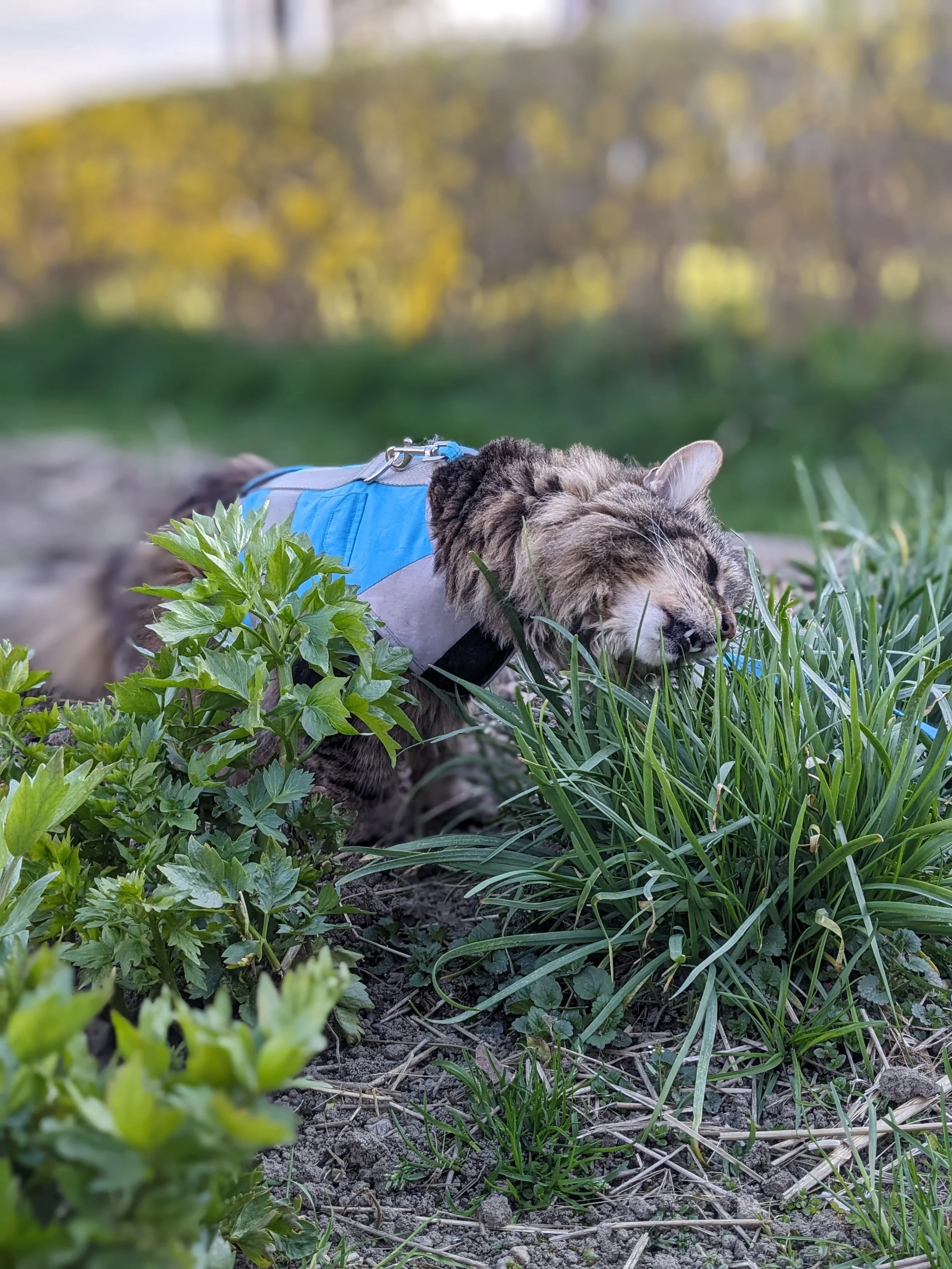
Finnick was grounding.
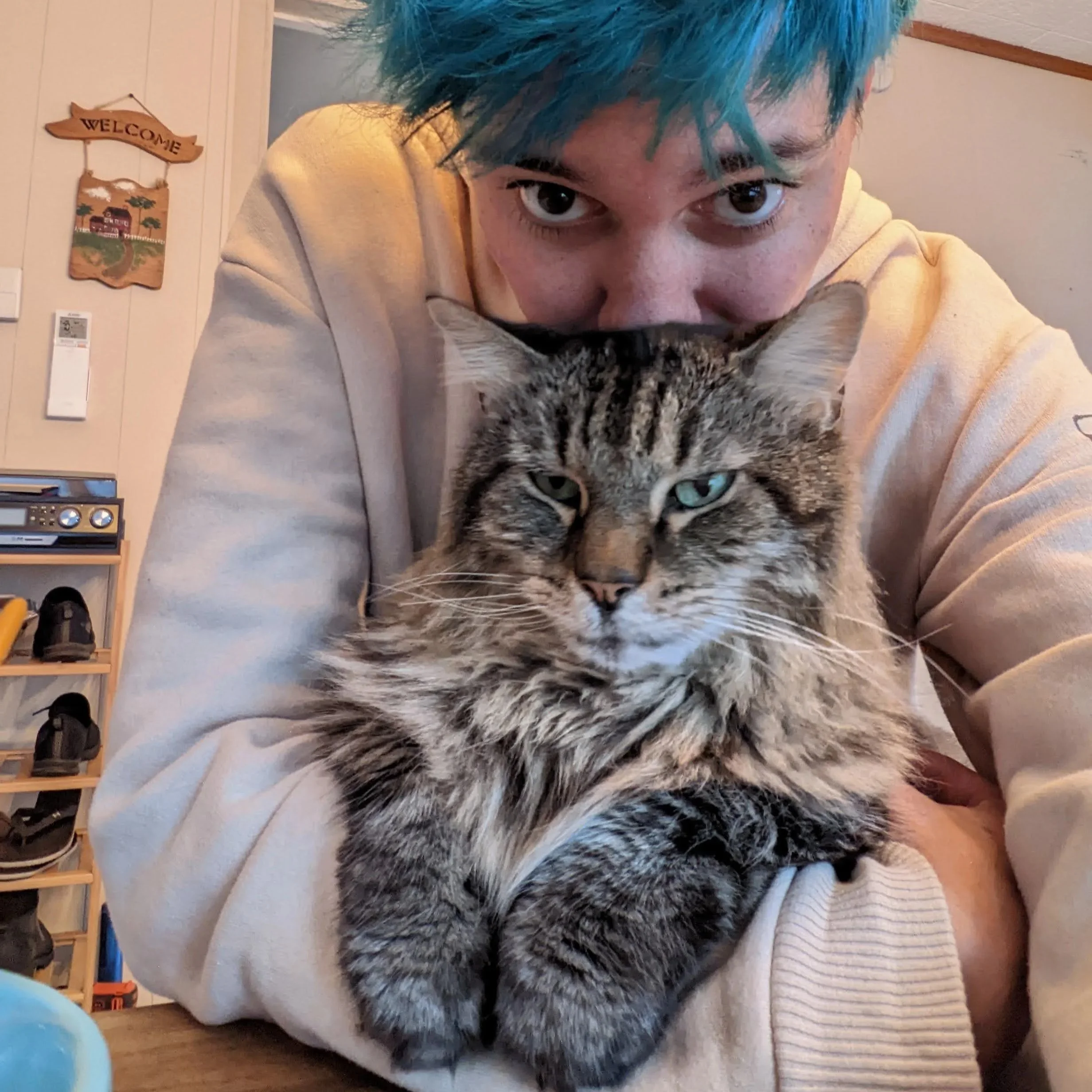
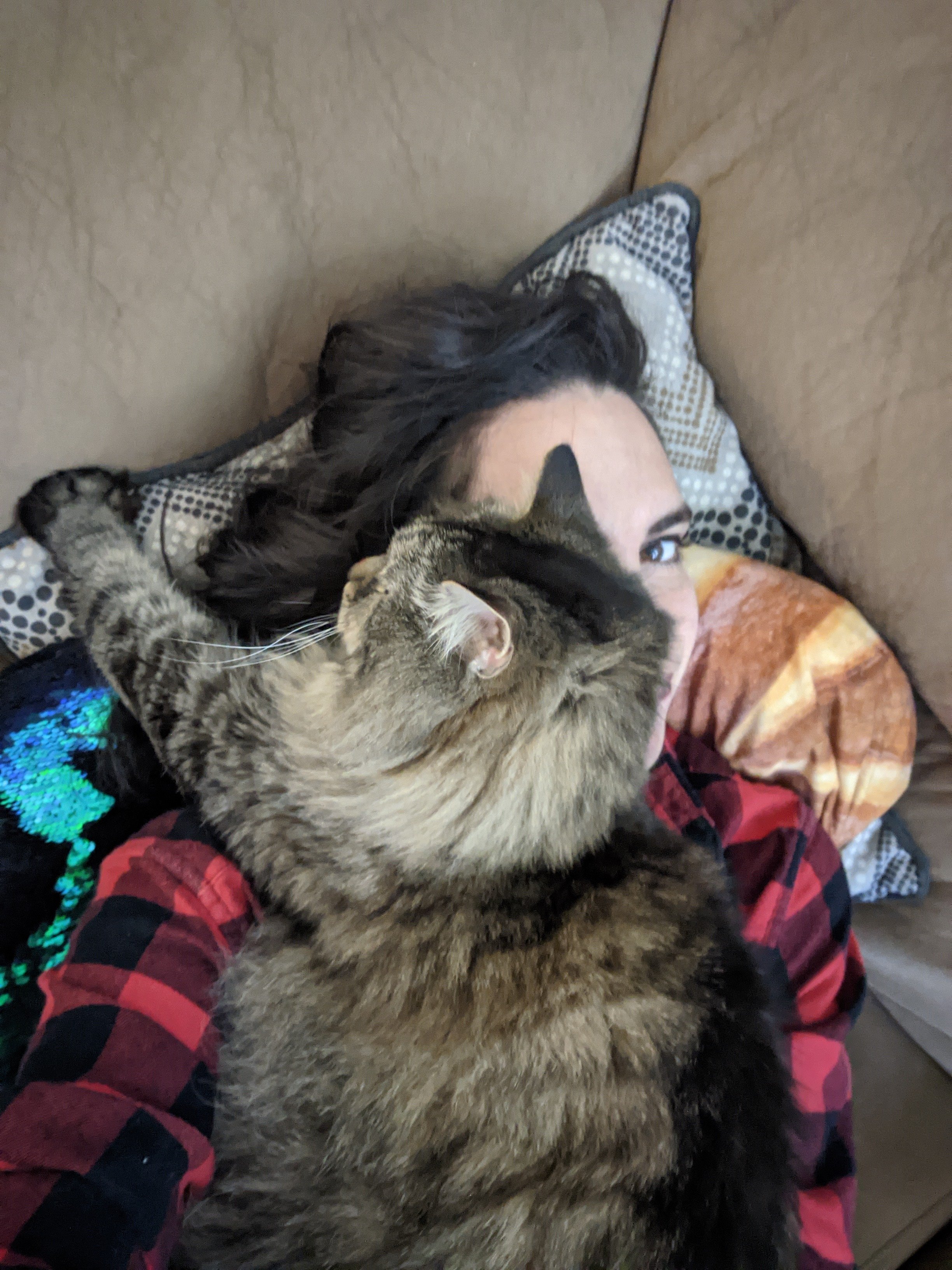
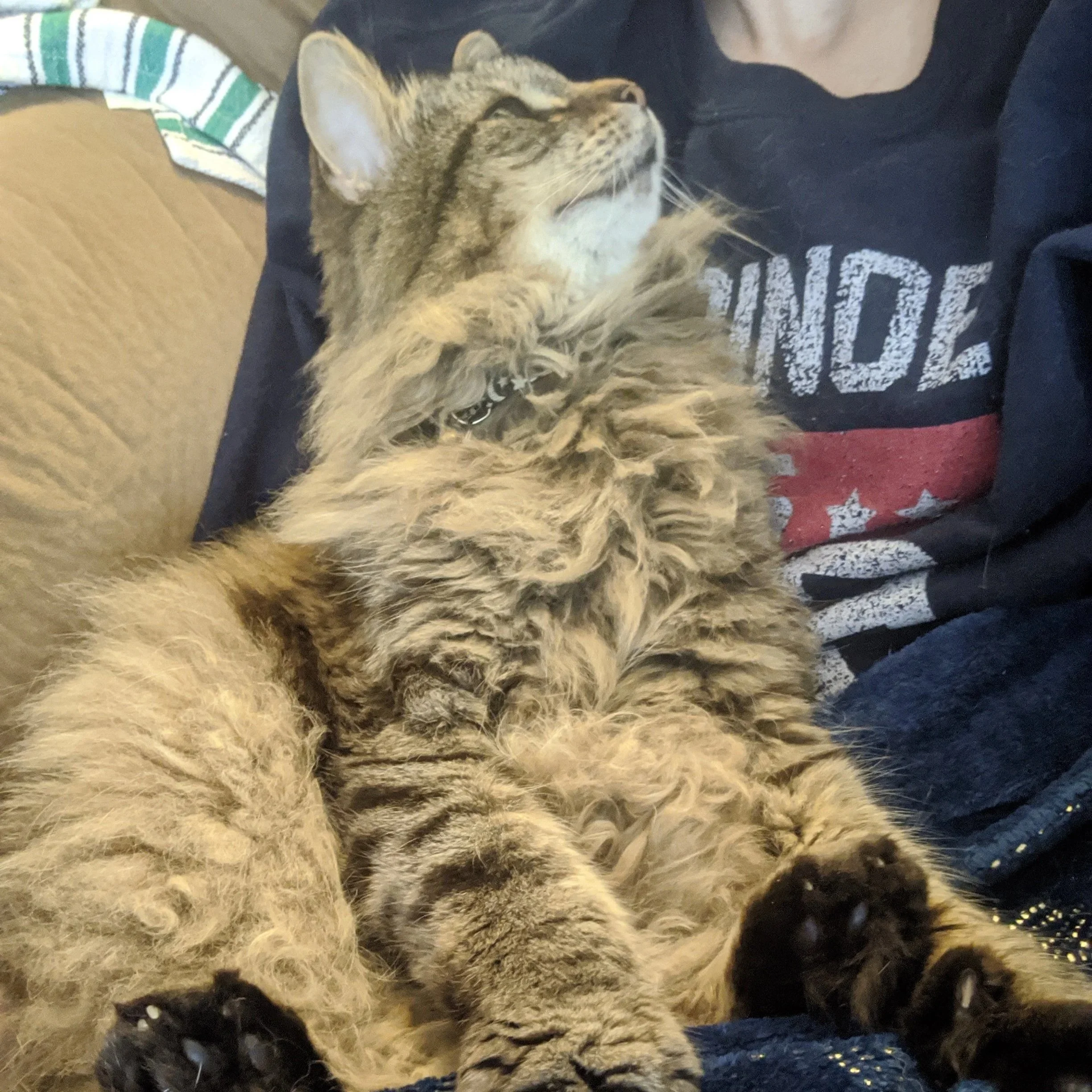
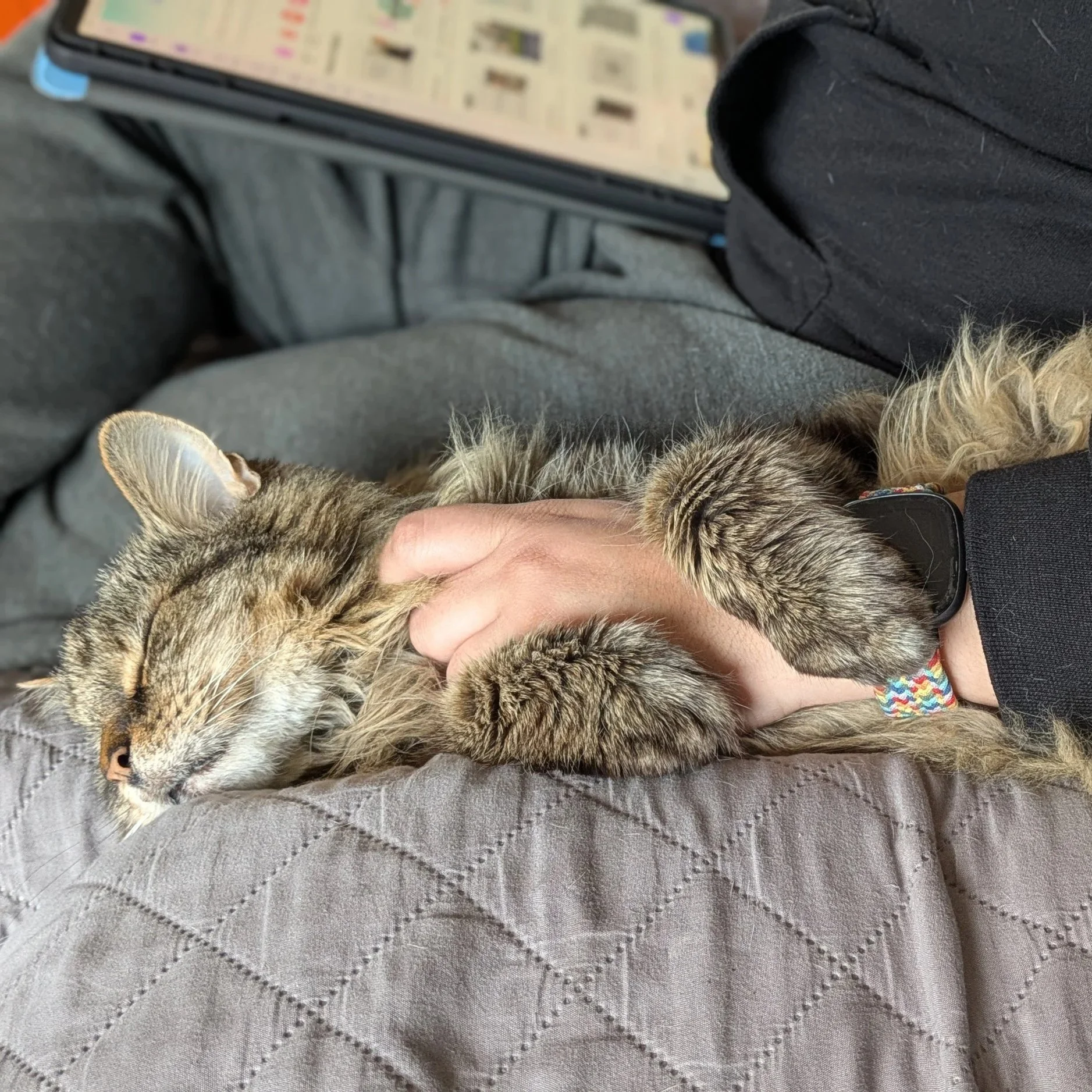
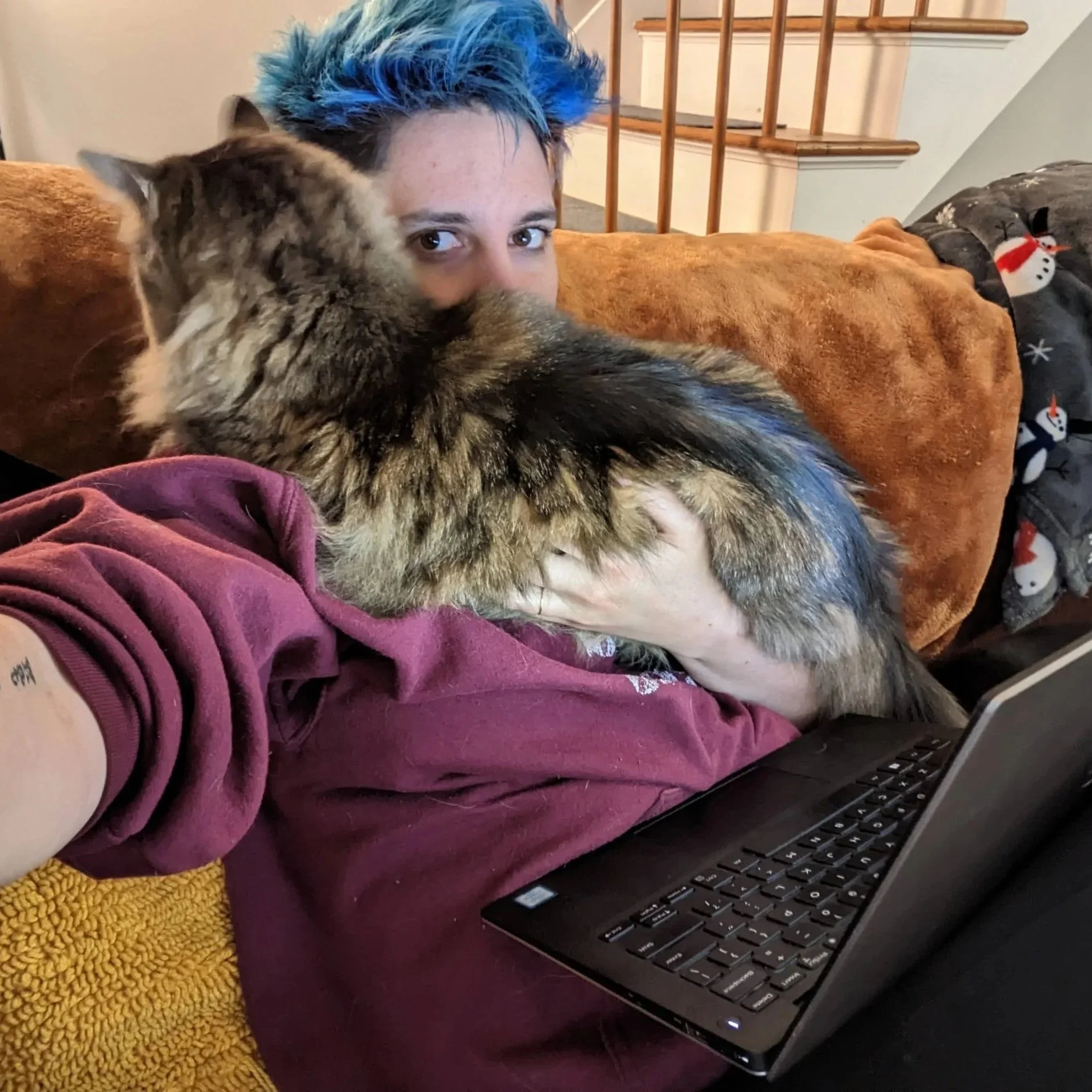
Multiple times a day, and almost every night he would sit on my lap, on my shoulders, or directly on my head, and purr. He would pester me for interaction, for play, for cuddles and pets. To go outside, to eat a snack. To train. He wanted to be involved. Helping as only a cat can.
He was frequently in the way of my “productivity.” With hindsight, I can see he was helping me reset myself back to baseline throughout the day. He helped keep me in the present when my brain and body tried to be anywhere else.
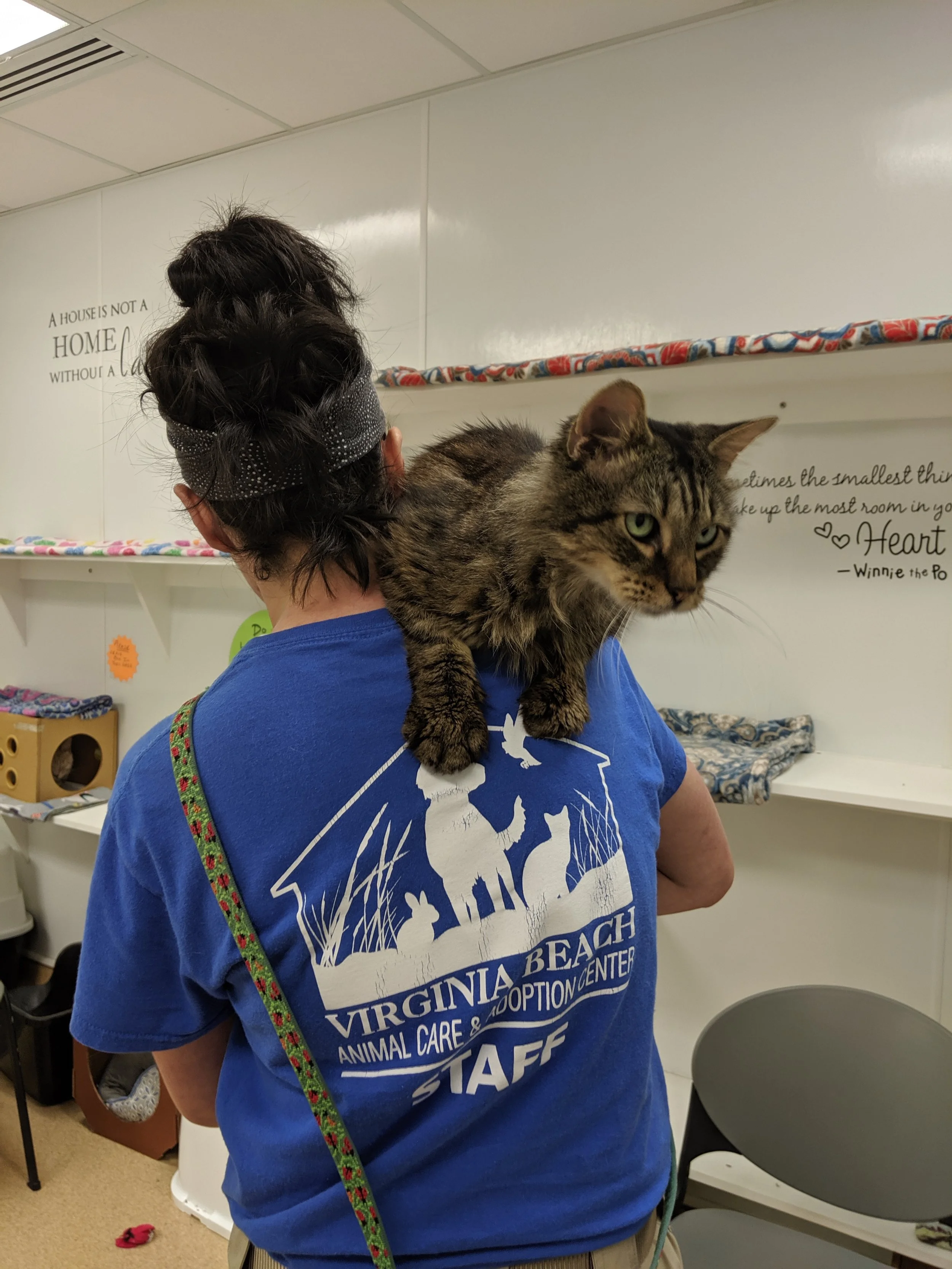
I first met Finnick at work in 2016. I got a call over the radio that a family needed to come look at a cat in the isolation unit because they thought he might be their missing boy.
I walked the family back, found him in the top right corner of the stainless steel cages, nearly recovered from a wicked upper respiratory infection.
He immediately started yelling, and I got him down. Upon his release, he began to headbutt me and purr, then turned his attention to the family -who initially thought it was their long lost companion- only to realize his eye and coat color were both wrong. We were all extremely disappointed.
Finnick was placed in the open adoption floor the next day where I showed him again to three interested families who all considered him, but decided against bringing him home.
With the help of a coworker, I sent a video of him to my roommates, hoping to convince them we needed a cat.
Against all odds (the owner of the home, my ex-husband was very allergic) he and the others agreed. I still don’t know what compelled him to say yes, but I am forever grateful.
I was dating a woman for the first time.
It was supposed to stay casual, but as foretold by the stereotypes, it became serious enough that I let my family - who’d I’d only come out to about a year or so prior - know I was seeing her. They remained as neutral as they possibly could, which was absolutely devastating to me. I was not disowned or shunned, but the weight of disapproval was heavy, and not being able to share the joy of finally understanding myself?
Sucked.
A Lot.
I had also recently taken a job that was supposed to be incredible, and had to quit after six weeks and enough stress that I’d lost the ability to eat. I was recovering at what would become one of the best jobs I’ve ever held, but I was still -generally speaking- a mess.
My roommate and best friend, Kai, and I spent my birthday together. Finnick had graduated from staying in my bedroom, to being out with us and the dogs and was enjoying his new domain wandering about and playing with toys. I was having a really really difficult night. I don’t remember what had happened, I can only remember the feeling of deep sadness and isolation from my family.
Suddenly, there was a scruffy cat on my chest. Purring deeply and kneading with his paws. Helping me breathe, helping me stay present, helping me just be. Of course, I didn’t recognize his help at the time, and instead laughed at him and enjoyed his company.
I’ve written before that the dogs I live with help me “learn how to human.” That’s more than a catchy tag line for the website.
I have a video of Yadi bullying me into going outside for a walk during a really dark depressive episode. I wrote in my Strawberry post about how the animals are teaching me co-regulation. Molly offered companionship & Eugene showed me joy - But to understand why I often don’t feel human, and to really understand what I mean when I talk about disenfranchisement and destabilization, we have to go back a ways.
I was born -
Just kidding. But I am going back to childhood for a minute.
****Content Change Notice: Direct discussion of the development of chronic suicidal ideation and stopped suicide attempts****
The first time I ever thought about suicide-
-not contemplating it for myself, but really thought about it- I was somewhere between the ages of six and nine, standing on wine colored carpet, just outside the heavy double doors that opened to the sanctuary of the independent fundamental baptist church my family attended.
My friend stood across from me and offered her thoughts.
“Sometimes, I think it would be better to kill myself than to keep living. If I keep living, I'll keep sinning, and God will have to forgive me over and over again for my whole life."
I startled, and remember the feeling of guilt roiling in my stomach as we simply discussed a "sin."
I countered as much- “But that's a sin."
She shrugged. "One big sin to forgive and then you're with Jesus. Or a whole life of sin after sin. Seems better." And the memory becomes fuzzy. My friend’s face, already unclear in the recollection, becomes completely blurred.
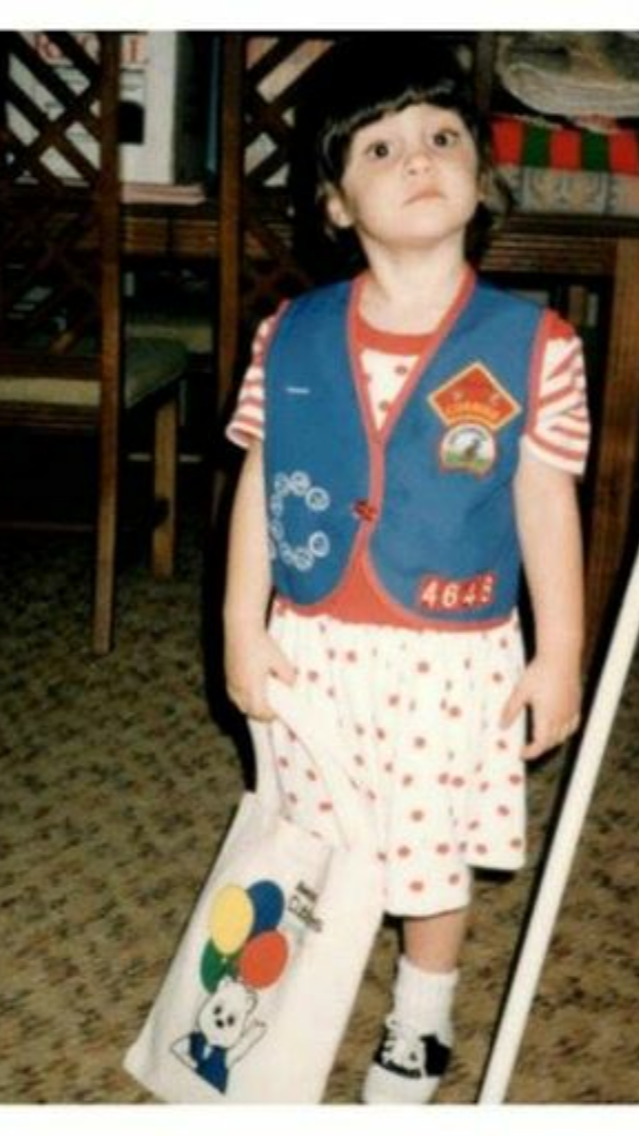
I "got saved" when I was four years old.
I believed I was sinful.
That I was born bad: disobedience, bad attitude, and selfishness were all evidence of my corrupt nature.
I had faith I was so bad that Jesus died to pay for my sins and redeem me. He sacrificed himself so that I could have a good relationship with God, and I wouldn't be so bad.
So I guess I actually thought about suicide at four. It was just framed as a sacrifice then.
The first time I thought about ending my own life, I was about thirteen.
I was having what I now know were Intrusive Thoughts: unwanted, graphic intrusions disrupting normal thought processes.
However, growing up in evangelicalism, I had been taught I was responsible for every thought and needed to take them “captive for Christ our Lord.” We believed that a cruel thought was just as much a sin as a cruel act.
I was failing. I was sinning. No matter what I tried.
I remember looking into my closet and wondering if the bar was high enough and strong enough, and then being devastated by that sinful thought as well.
I can’t remember much more until I went to Bible college at seventeen.
I never, while I was in the faith- would've considered Jesus' death a suicide. It would've been blasphemous.
But he chose to die for us. To make life worth living. To make us better.
Is it that far of a stretch then, when I truly believed how much my own death would improve everyone else's lives?
Back around 2014, I stopped trying to hold onto my family’s faith, and I realized I was queer.
The loss of my faith had been devastating, my understanding of how the world worked was reforming. The church I had been attending at the time was aggressive when I had tried to discuss this with them-and a large portion of the community I had built as a new adult vanished. The day I really thought about ending everything, I decided to try listening to a calm, meditative recording, and abruptly had what I now know was a panic attack.
I practically ran from the house, and in a frenzy of energy looked to the end of my street and considered walking into Pensacola Bay.
A sacrifice.
An accident so those who knew me wouldn't have to suffer with worrying that I’d go to hell.
I fully believed it would be better for my family to grieve a dead, cis-straight Christian, than a living, queer agnostic. I felt I was in a vice. My very existence hurting what felt like everyone.
I found a therapist. I talked to Kai and my ex-husband.
And that kept me alive a while longer.
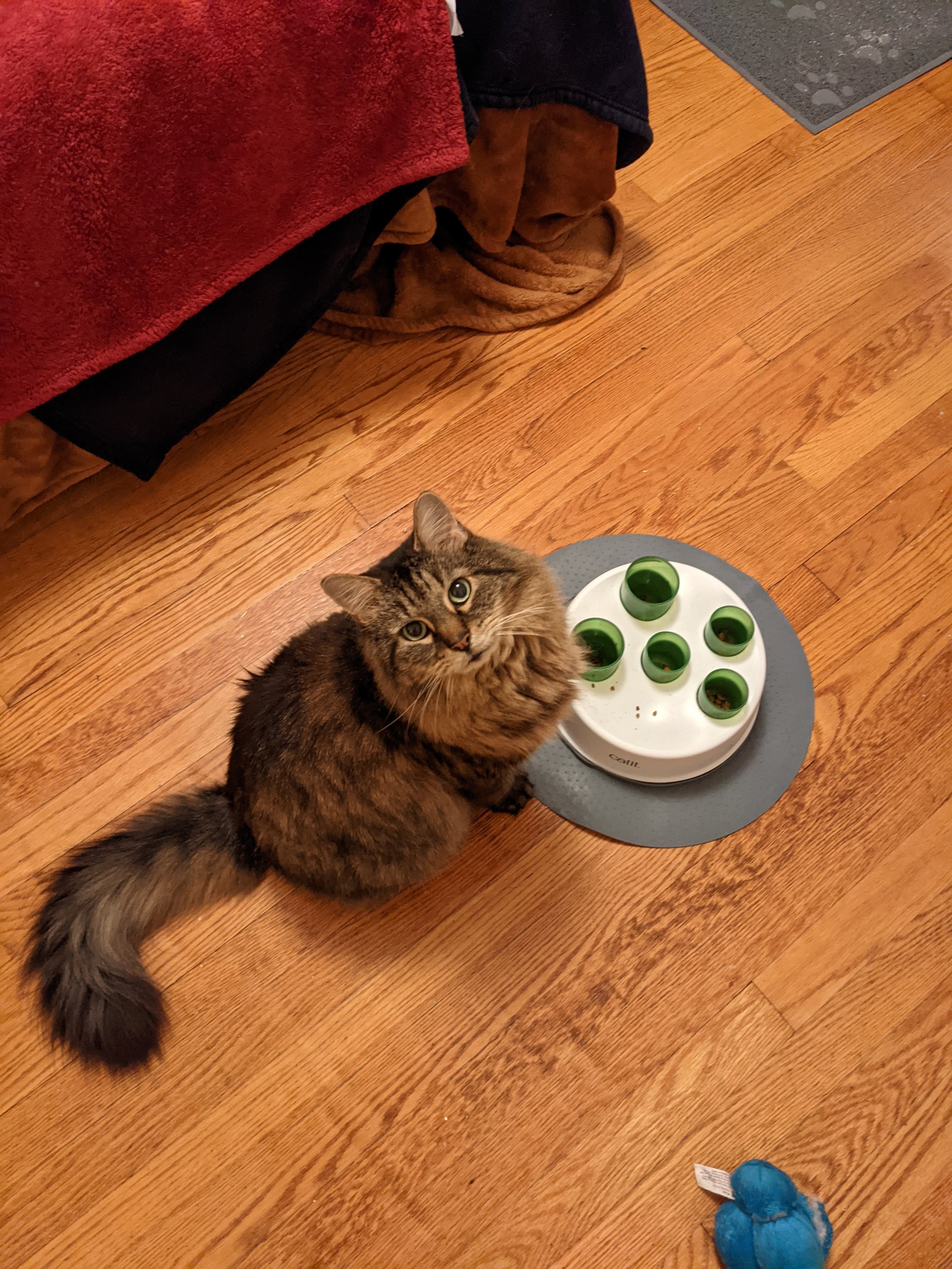
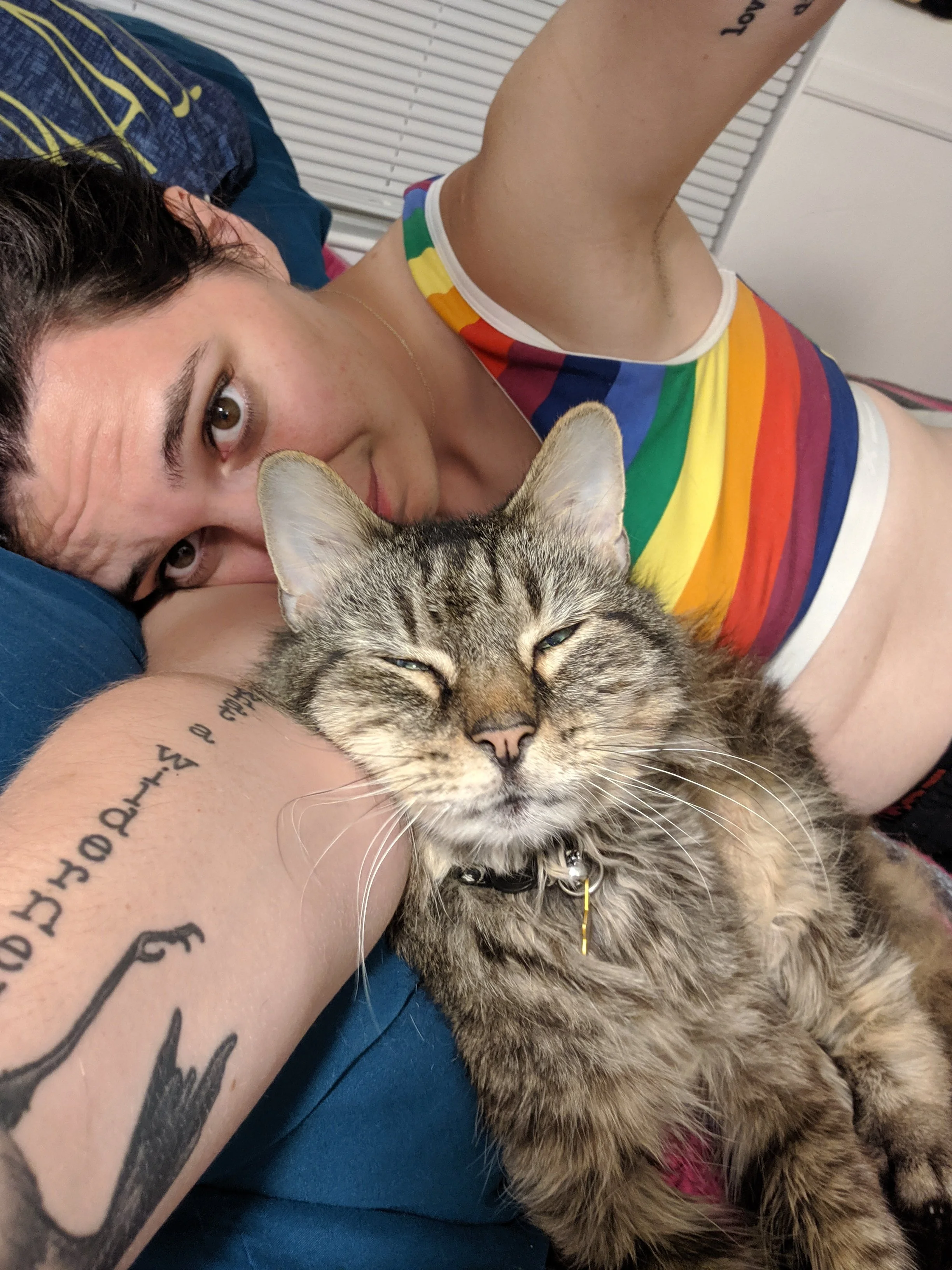
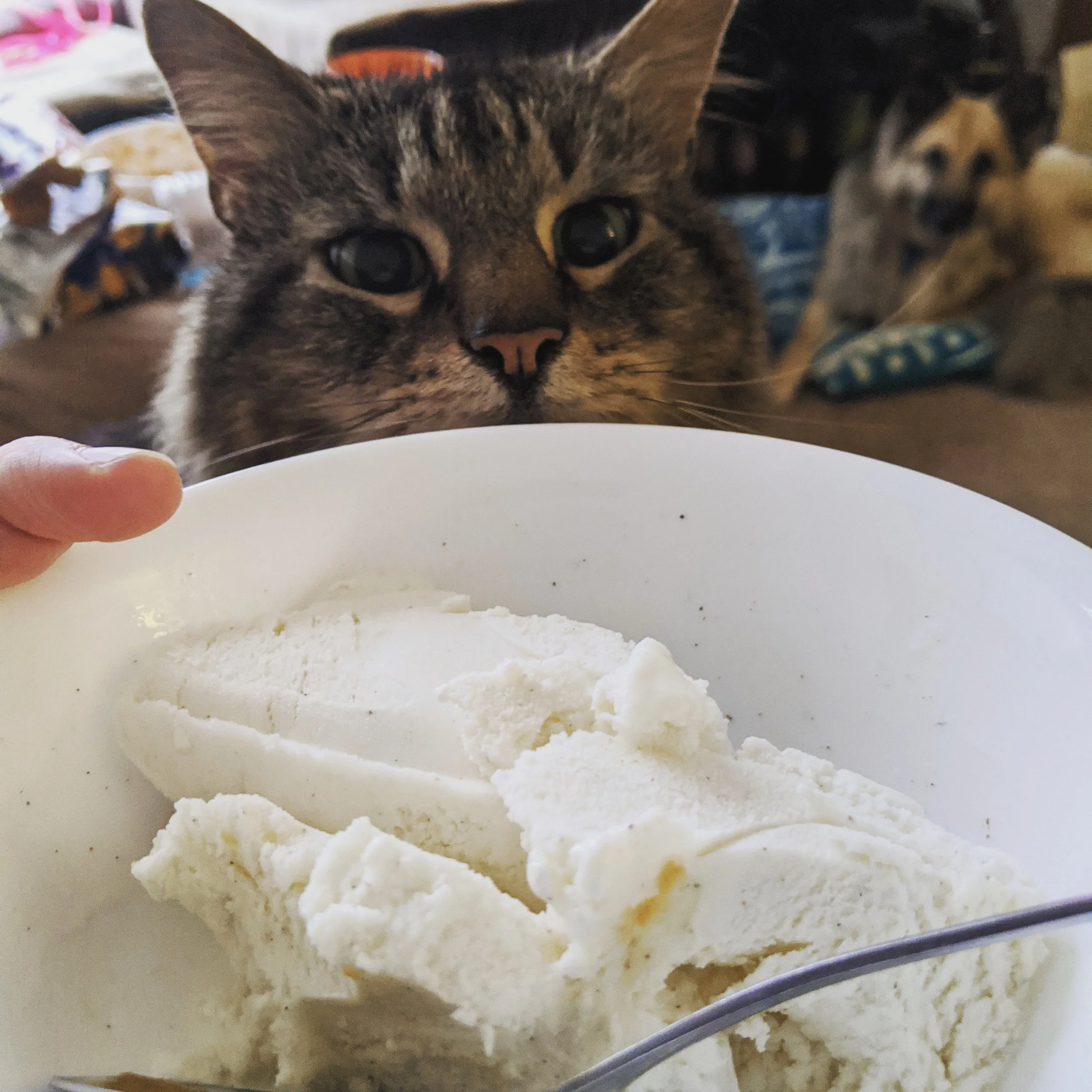
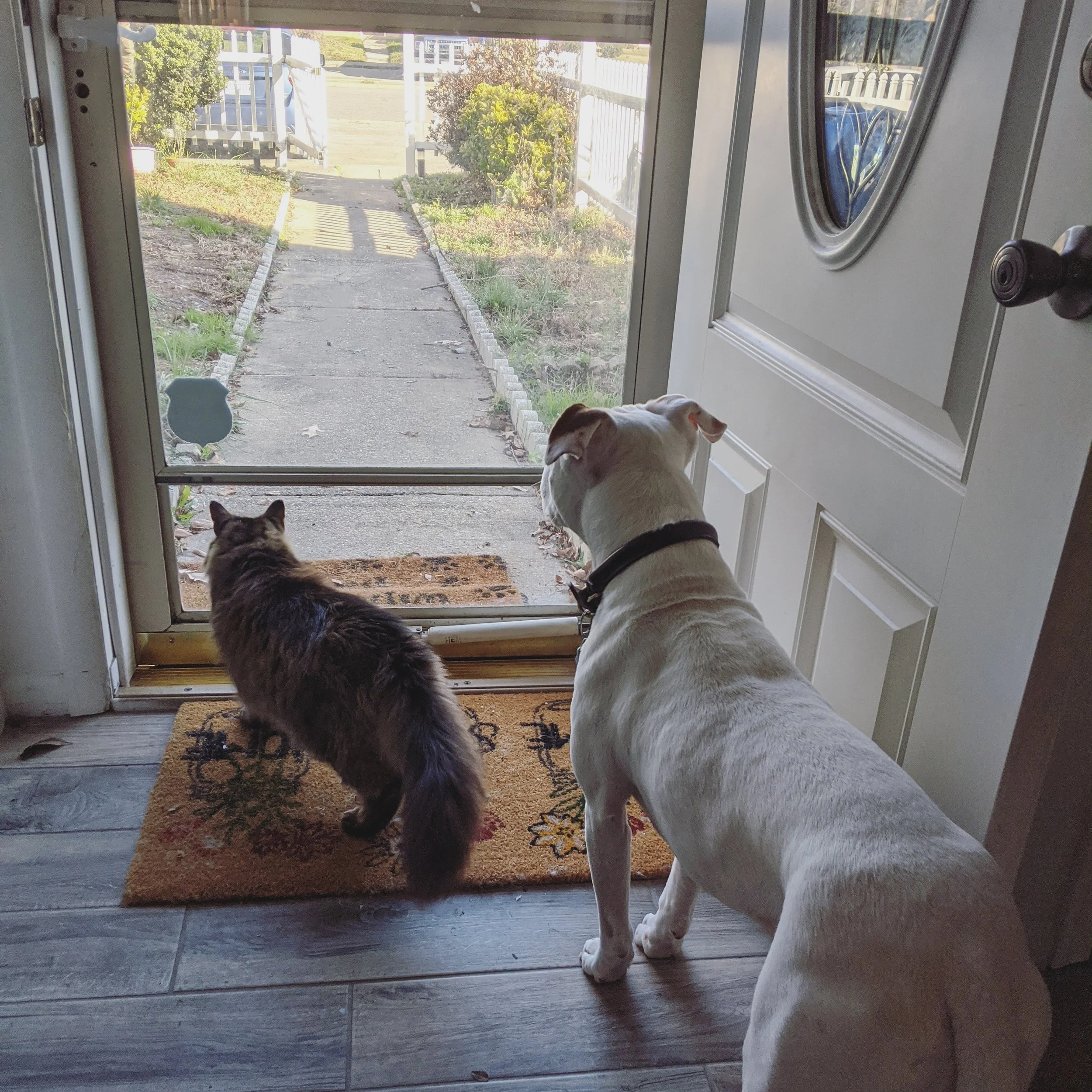
Finnick was an incredible friend.
He, like Yadi, had been with me through multiple homes, jobs, long moves, relationships forming and ending.
He helped maintain me. He offered curiosity & exploration. He stole food. He brought extreme “bro” energy and zero self-preservation skills. He shared humor and exceptional toy-hunting. He was a creature who existed in his skin with no worries. He fully believed everything would work out for him, and that kind of confidence in that tiny little body was both inspiring and exasperating.
He offered connection in a way only he could - and he offered it to anyone who wanted it. To other cats, humans, or dogs.
His presence in my life helped me keep going, even when I didn’t understand how.
The closest I came to succeeding was in September of 2022.
I woke up and knew that if I walked into my work shift where I would be alone, I was going to write a note of apology to my coworkers and then end my life in the staff bathroom.
I had tried to tell my doctor how awful I was feeling earlier that week, but I didn’t know how to communicate that I wanted to die because I didn’t.
I didn’t want anything.
Well, I wanted to stop failing. At being a partner, at taking care of myself, at taking care of the animals, at my job, at being a human.
I was exhausted, and I had faith, a deep unwavering belief, that my partner, my animals, my job, my family, everyone would be better off without me.
Fortunately, and unexpectedly, my ex-fiancé hadn’t gone to work yet. I somehow fumbled out the words to her.
And she told me to call out of work.
My brain couldn’t comprehend not going to work as an option.
I don’t remember much else of that day. I got on a telehealth call with my doctor who prescribed me emergency medication.
I remember my ex sweeping through the house and putting all of our medication -including the dogs’-and all sharp objects into the trunk of her car. I remember her telling me this couldn’t happen again.
And then I slept.
I slept for days.
I spent most of the days in the guest bedroom, because going up the stairs was too much effort.
I turned on The Lego Batman Movie and watched it on repeat.
*****This ends the direct discussion of suicide attempts.*****
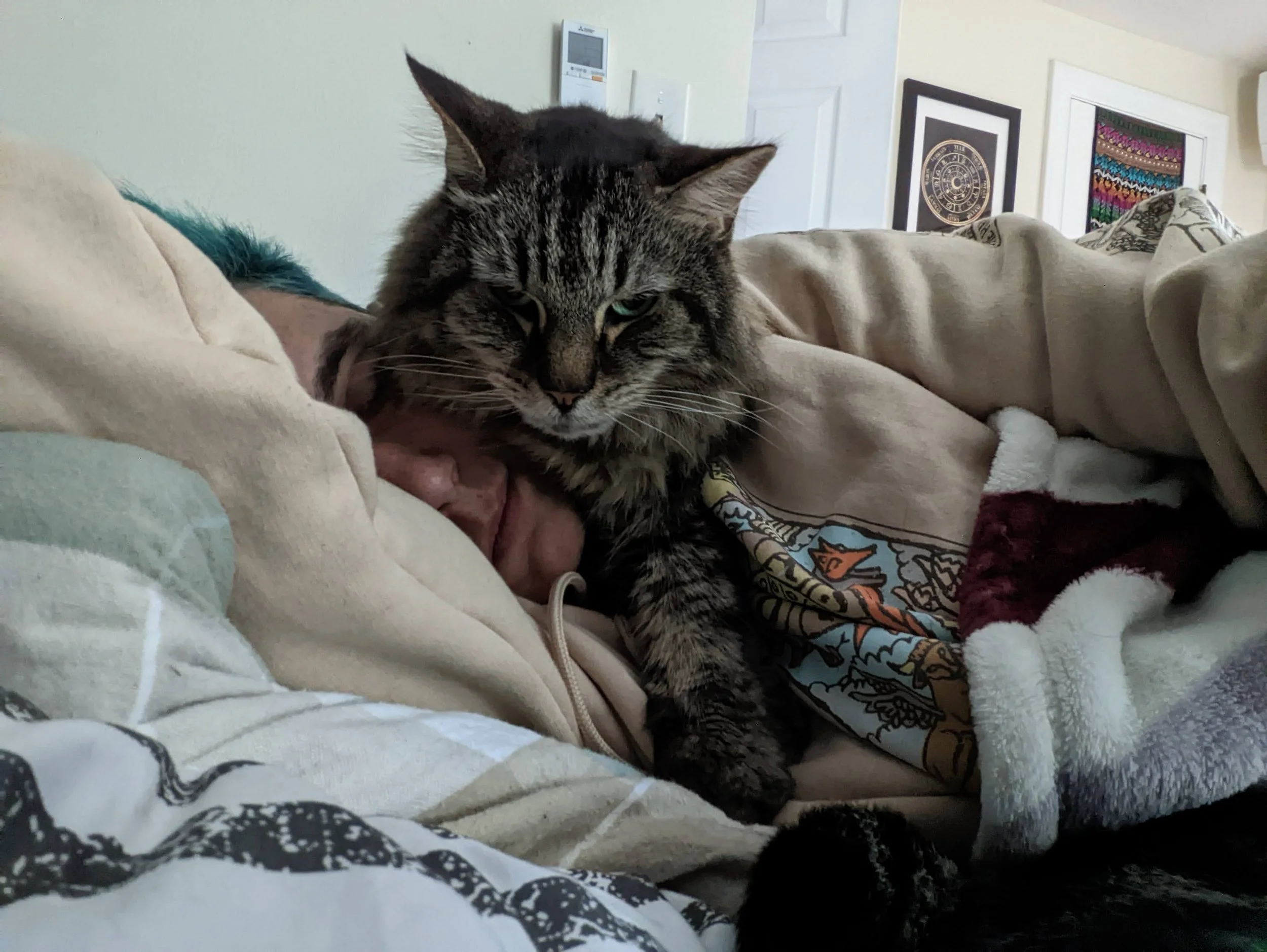
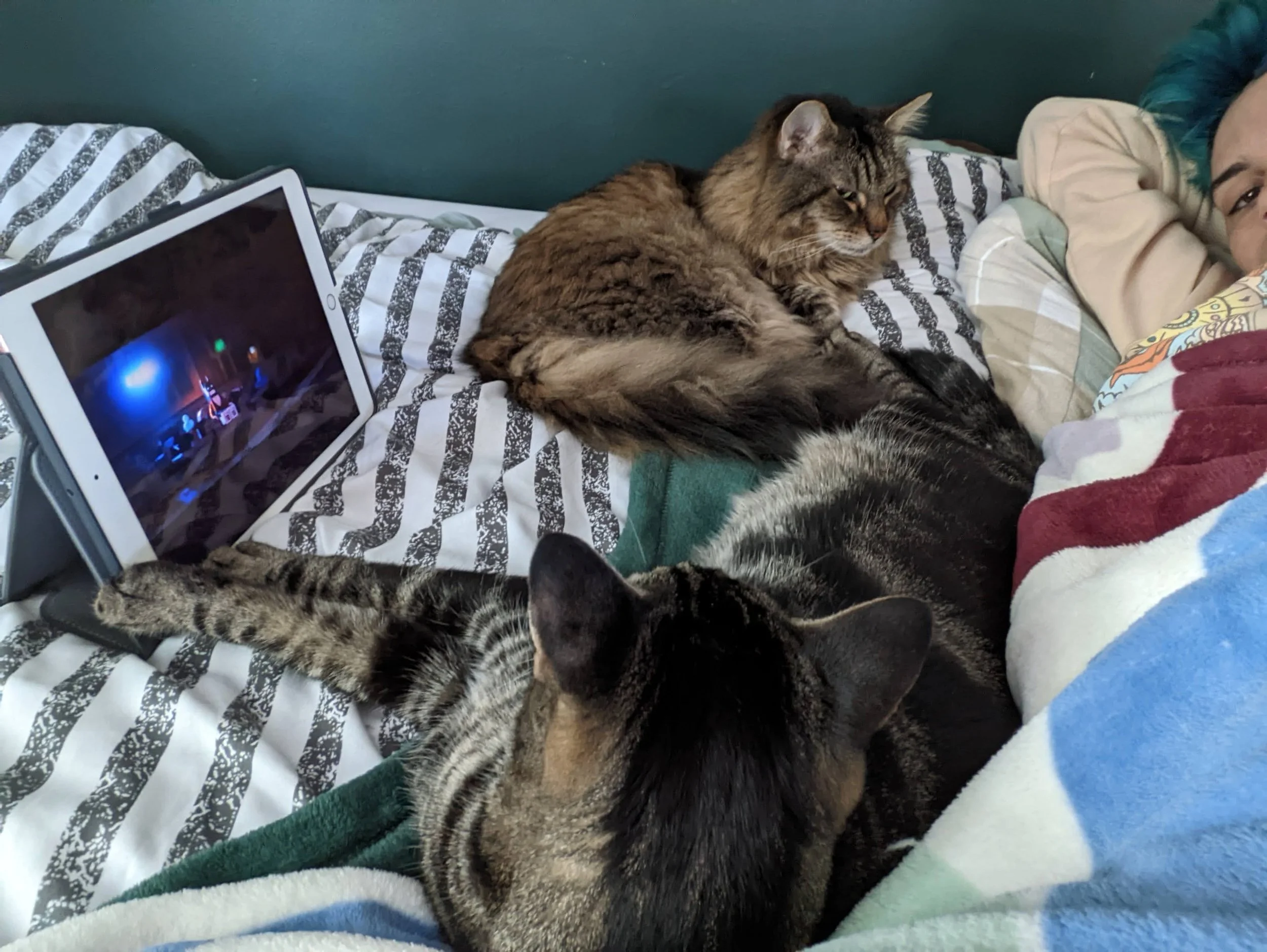
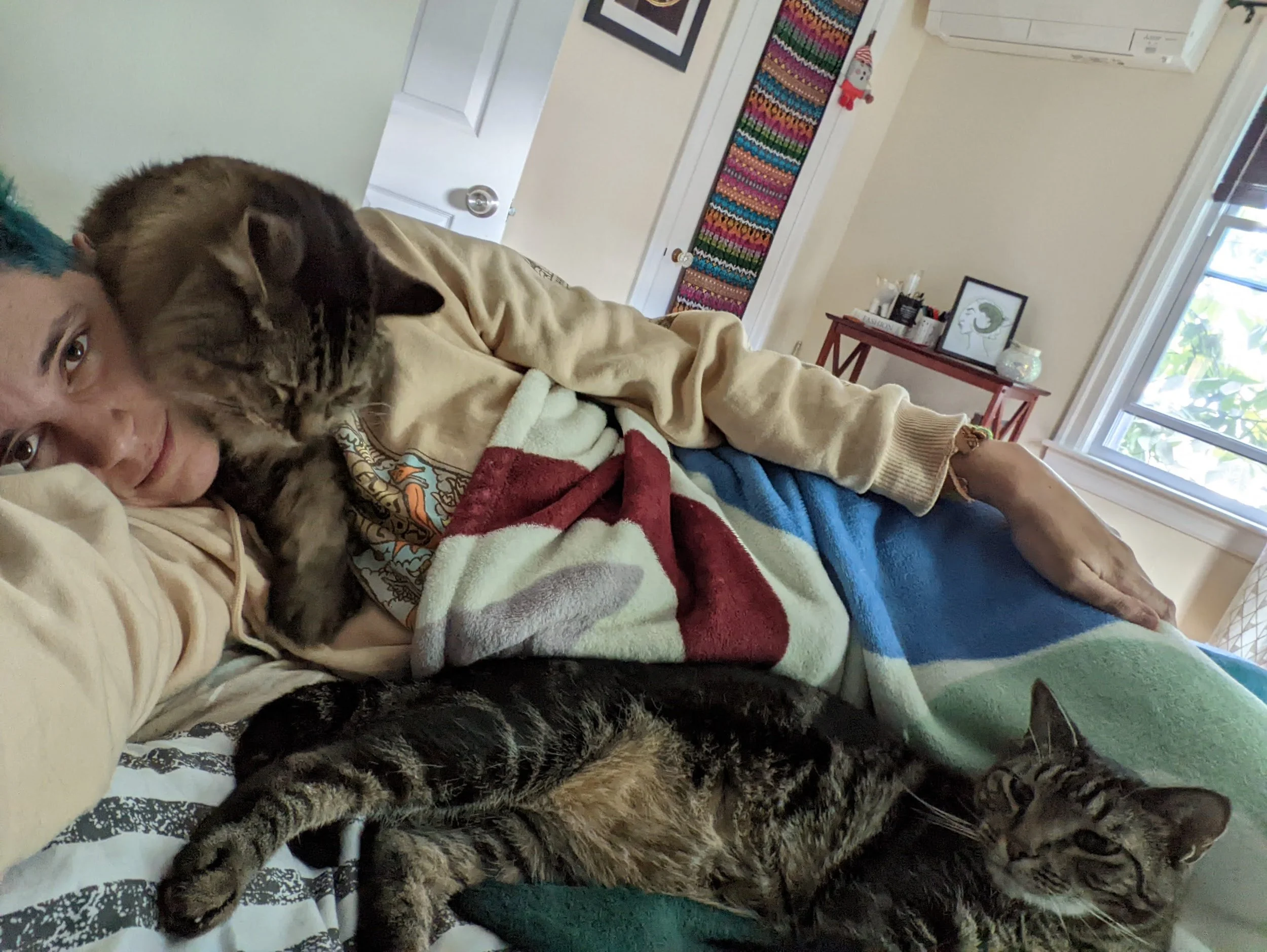
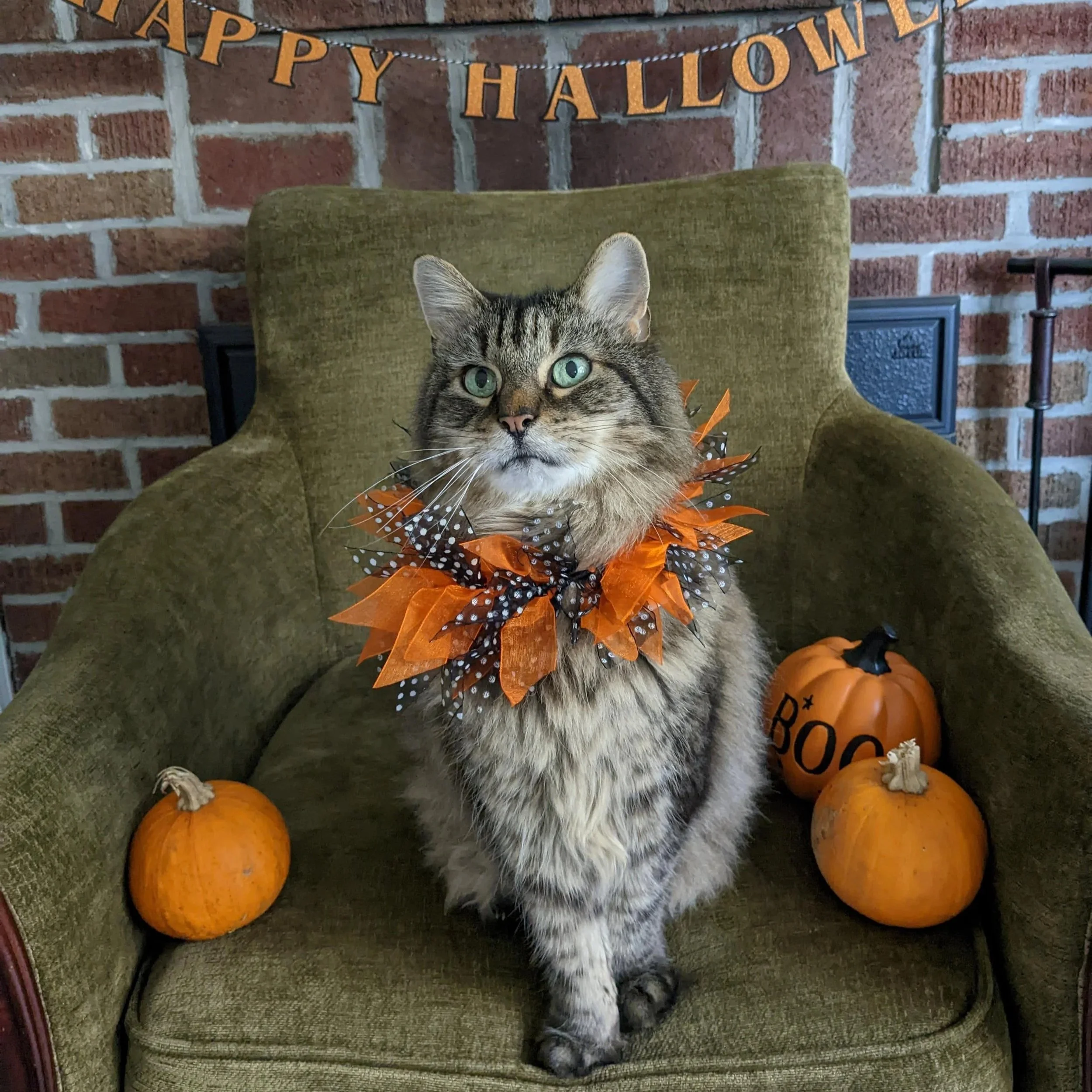
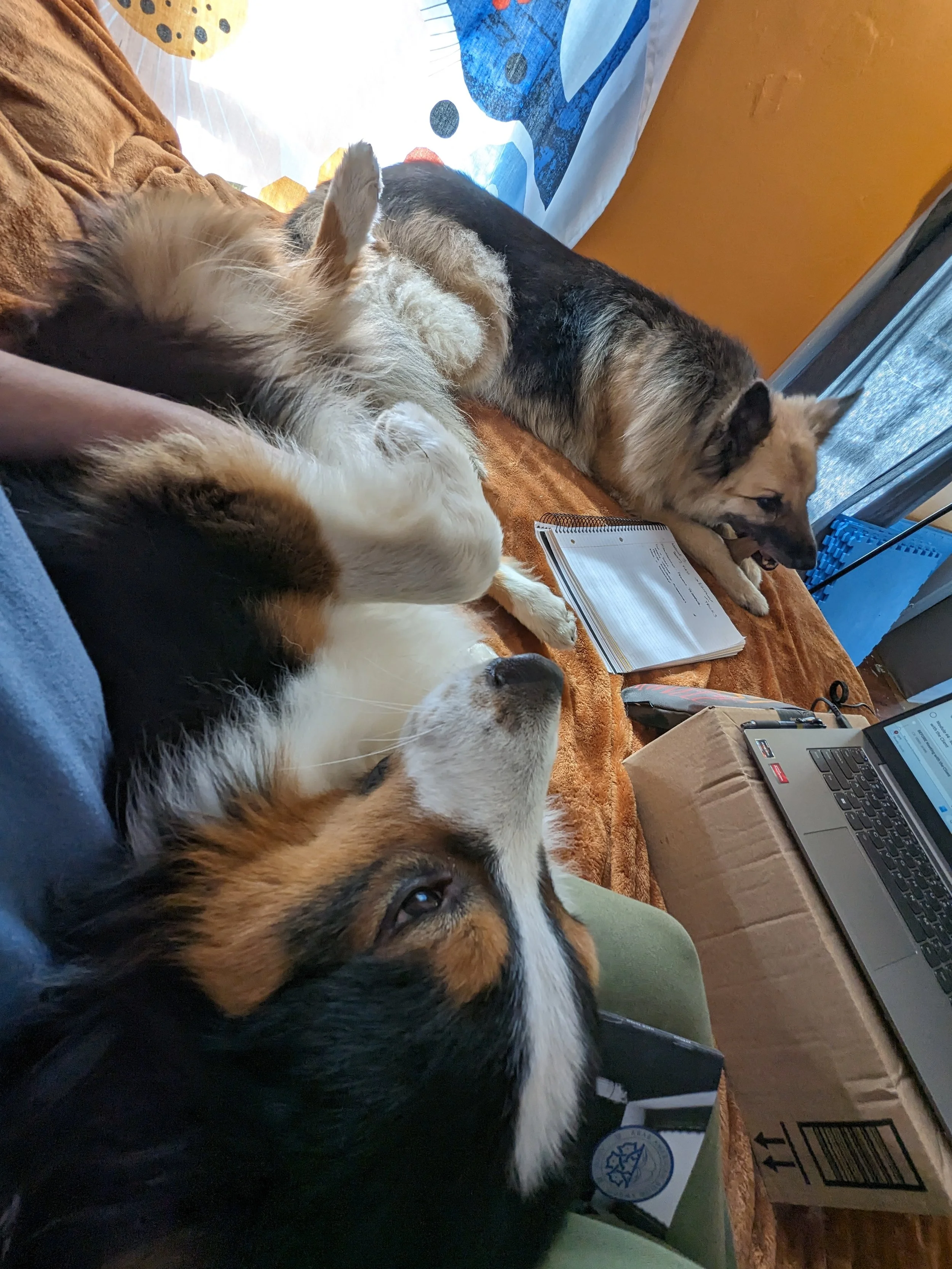
I can’t remember Yadi, or Gene, or Jessie during any of this recovery. I found old photos from these weeks where I apparently ordered Halloween costumes for all of them trying to find something joyful to hold onto.
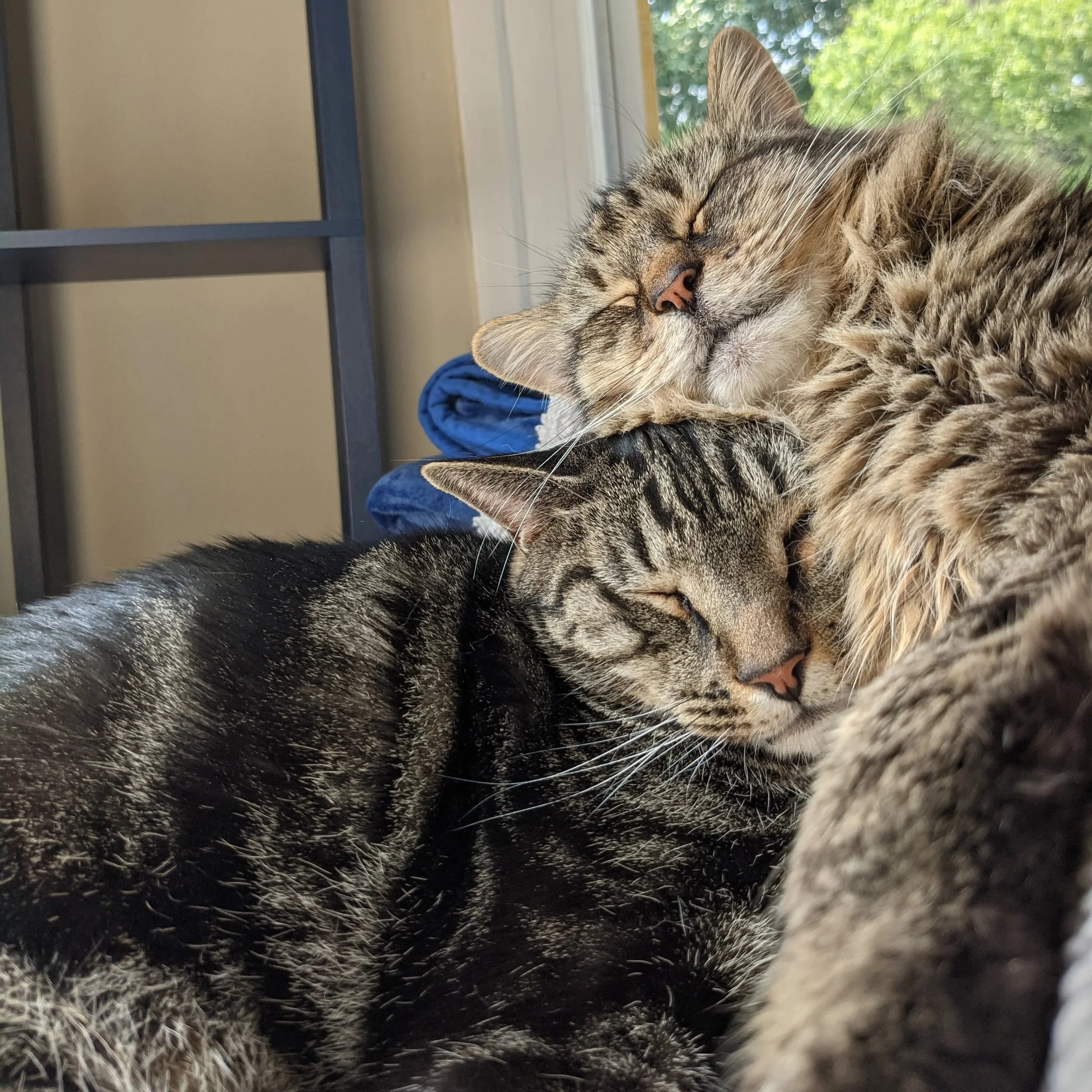
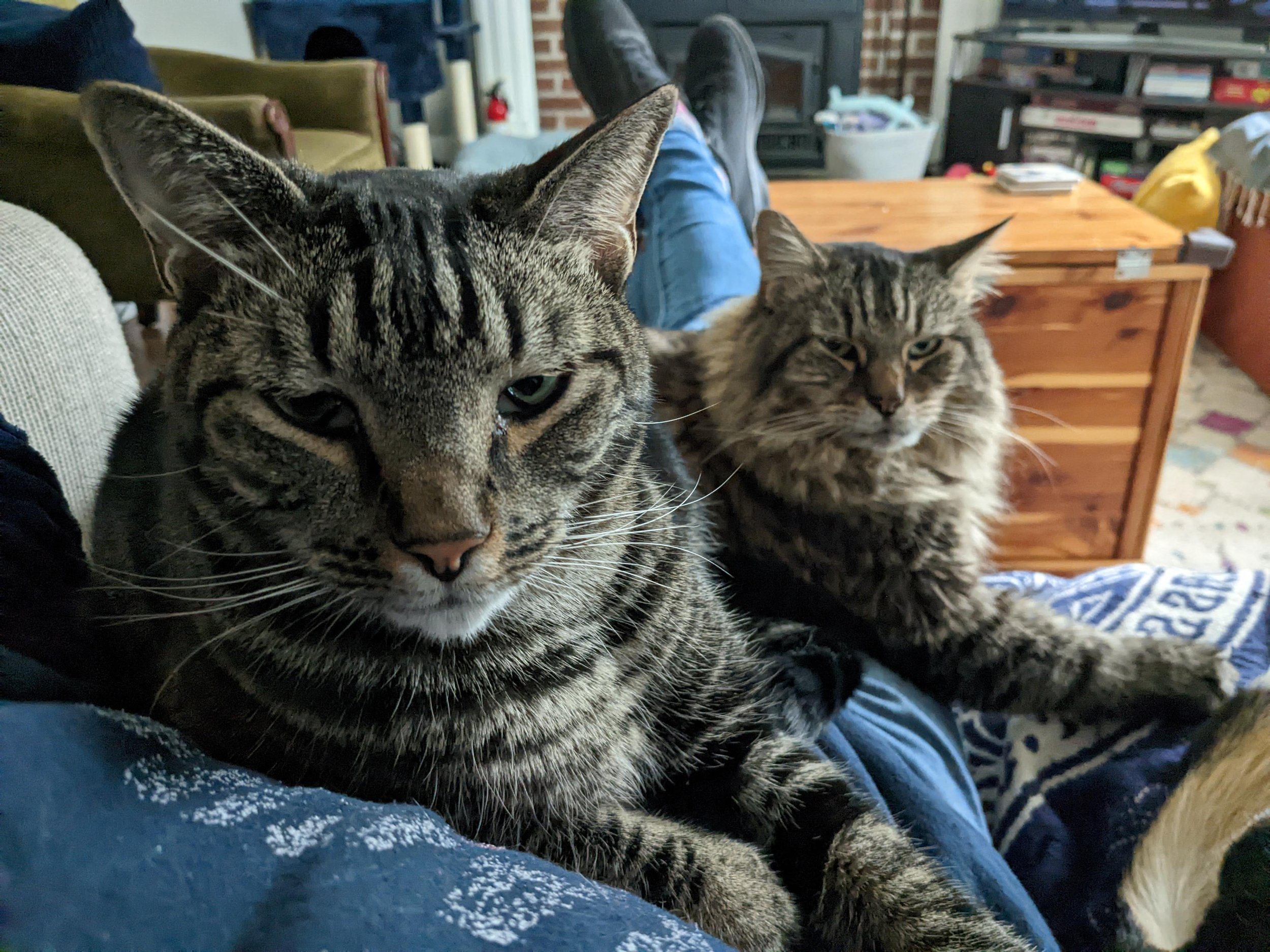
But Finnick (and his step brother Timmy) spent their days with me in bed. Curled up with me while I listened to Will Arnette learn about the meaning of family. Personal purring weighted space heaters helping me sleep. Their warmth, rhythmic breathing, and their connection helped me stay tethered.
About two weeks later, my ex drove me to Rhode Island for the Aggression in Dogs conference, where I felt my brain light up. I was still not well, but I was able to learn. I was able to enjoy something. And it had been a long time since that had happened.
Sometimes, you can try to die and then show up at a work event.
Between the conference in October and Spring of the next year; I have almost no memories. I started going to therapy, tried to figure out how to make living sustainable. My ex enrolled me in the KPA Professional Program, a gift to start my dog training career. Looking at photos, I seem to have spent a lot of time walking the dogs in the park by my house. And I know I needed that time with them, I just wish I could remember it. Another side effect. Another loss.
I cried when the medication worked because I didn’t know it could be so easy to live.
In the Summer, I started over again.
New roommates, new job, new home.
Me, Eugene, Yadi, and Finnick.
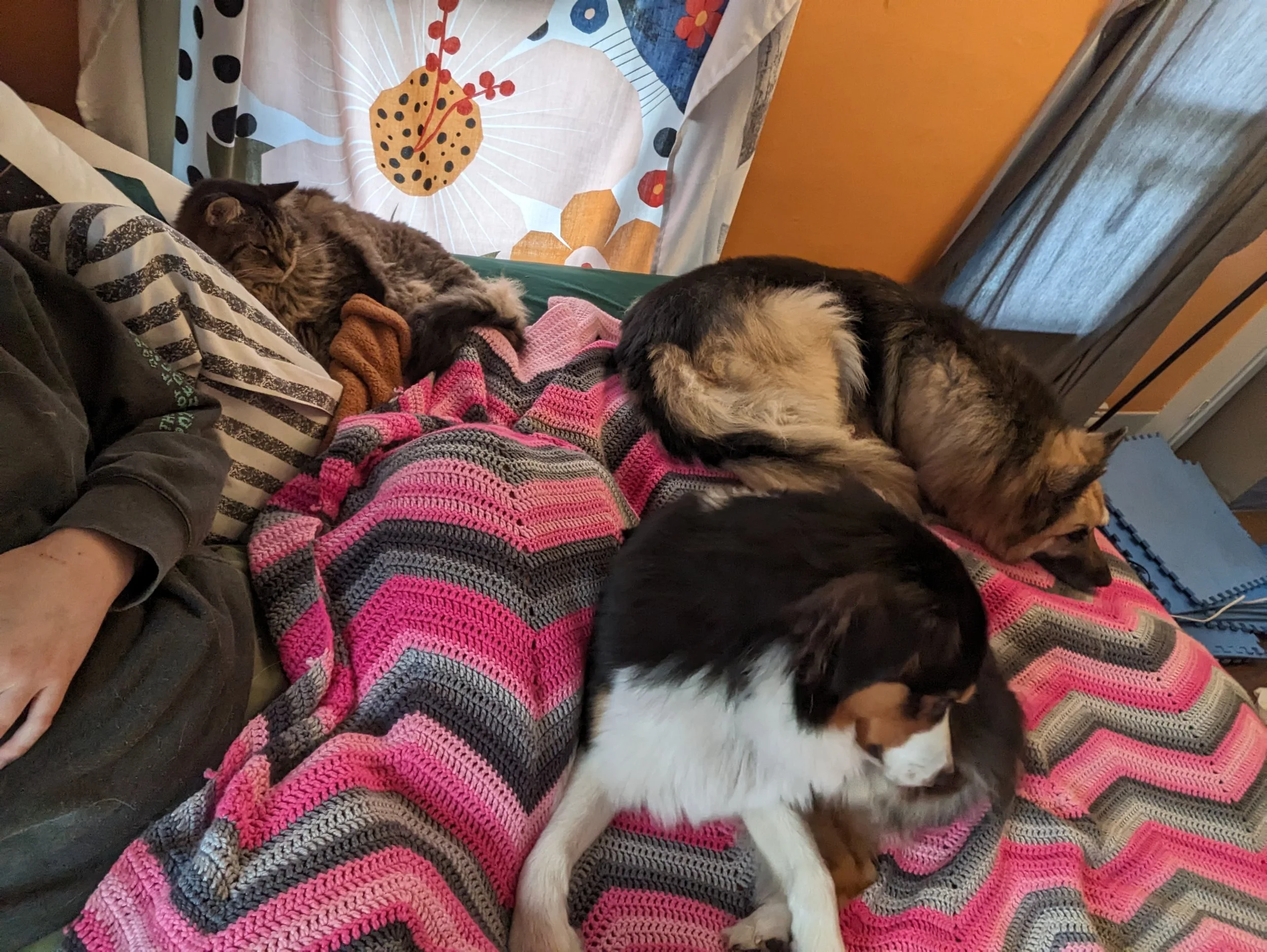
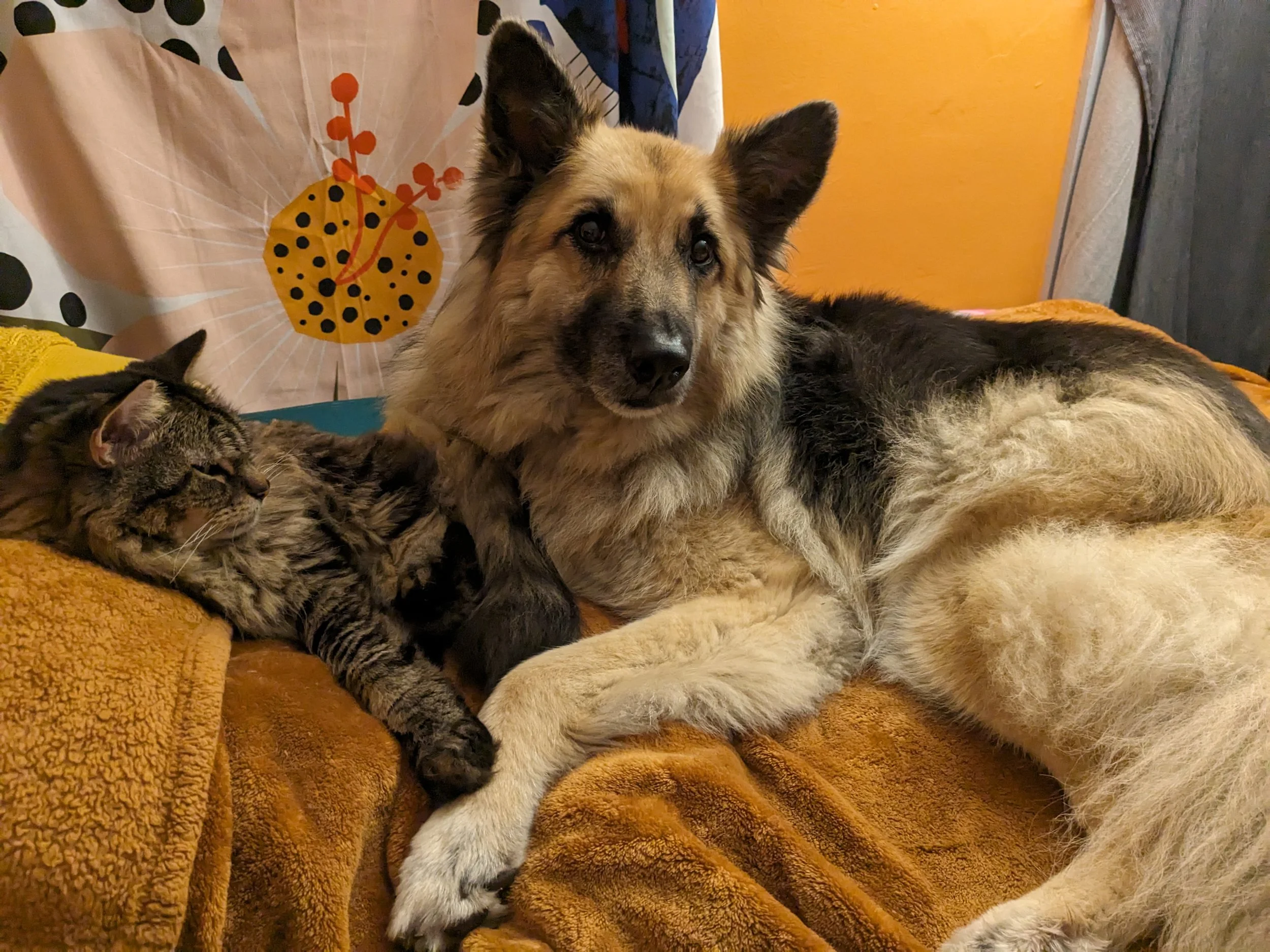
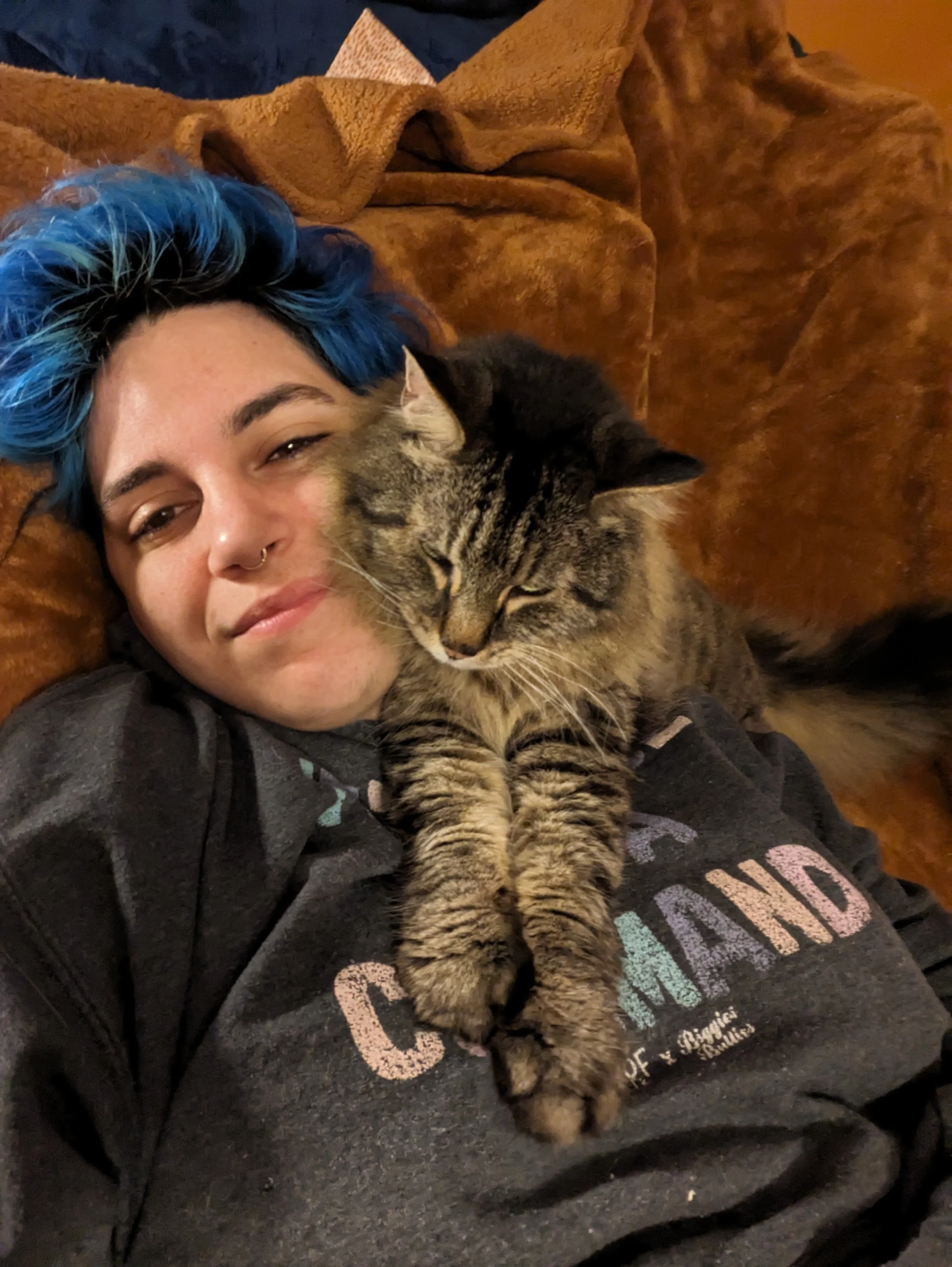
Finnick made himself at home immediately.
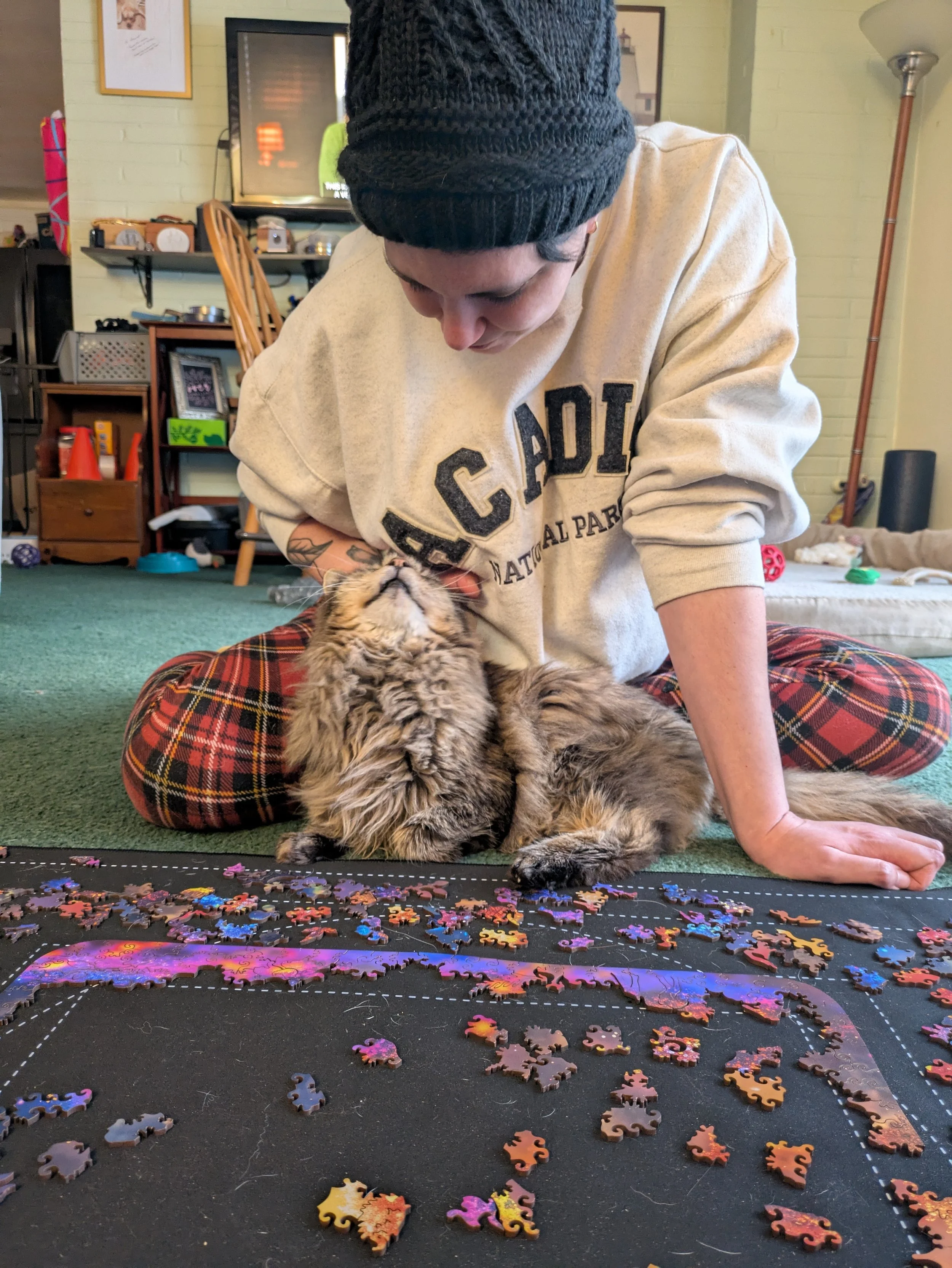
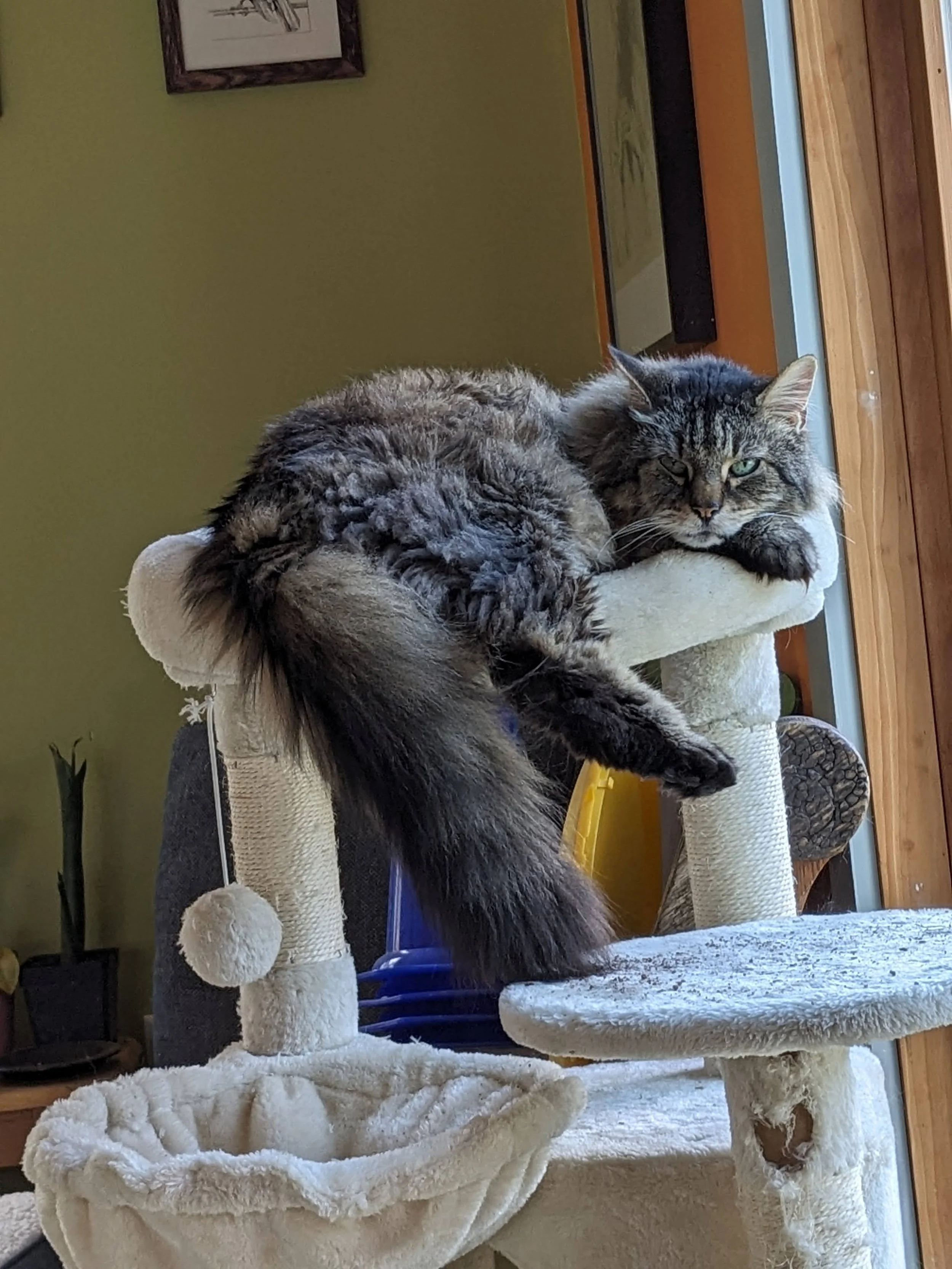
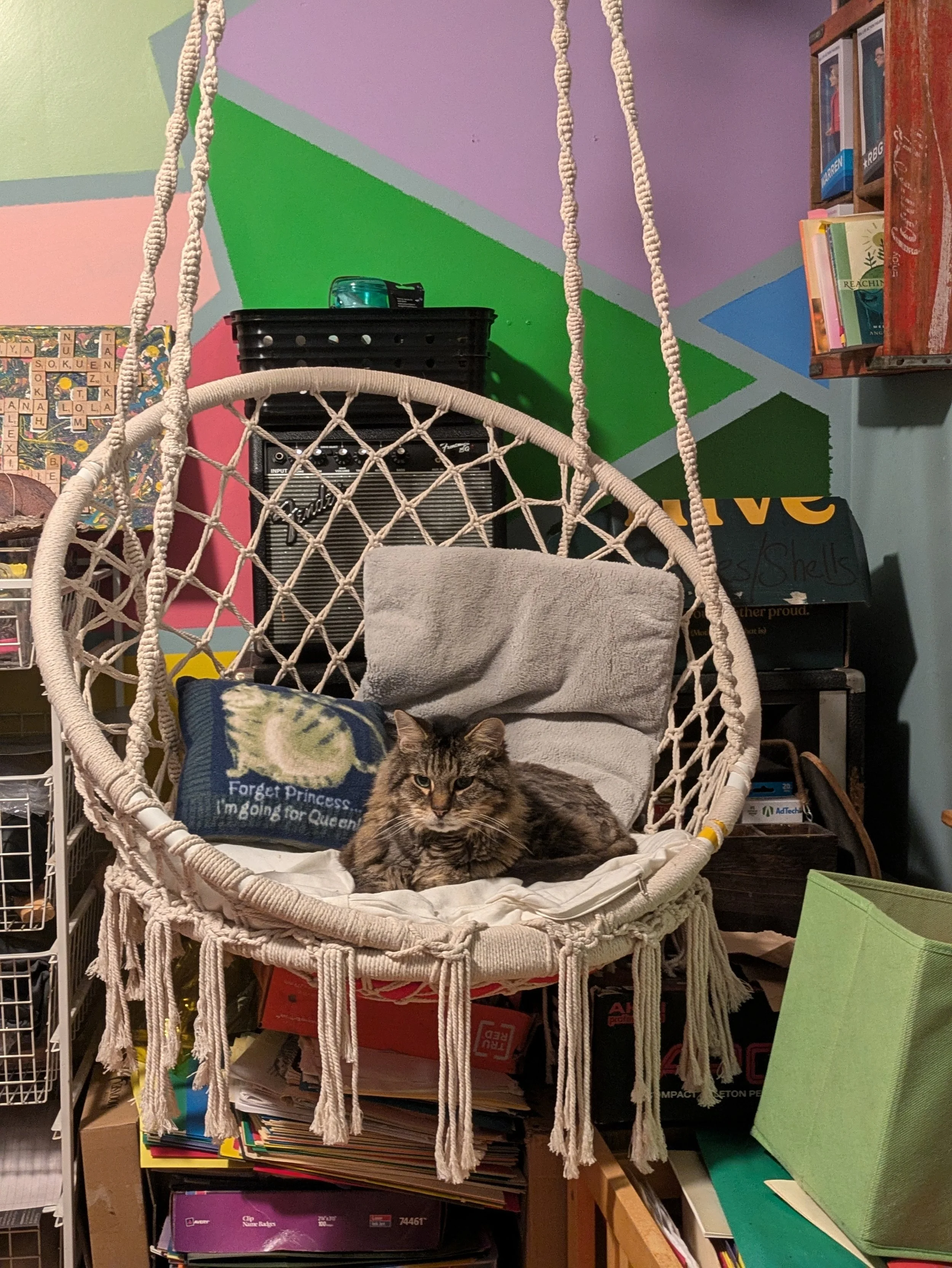
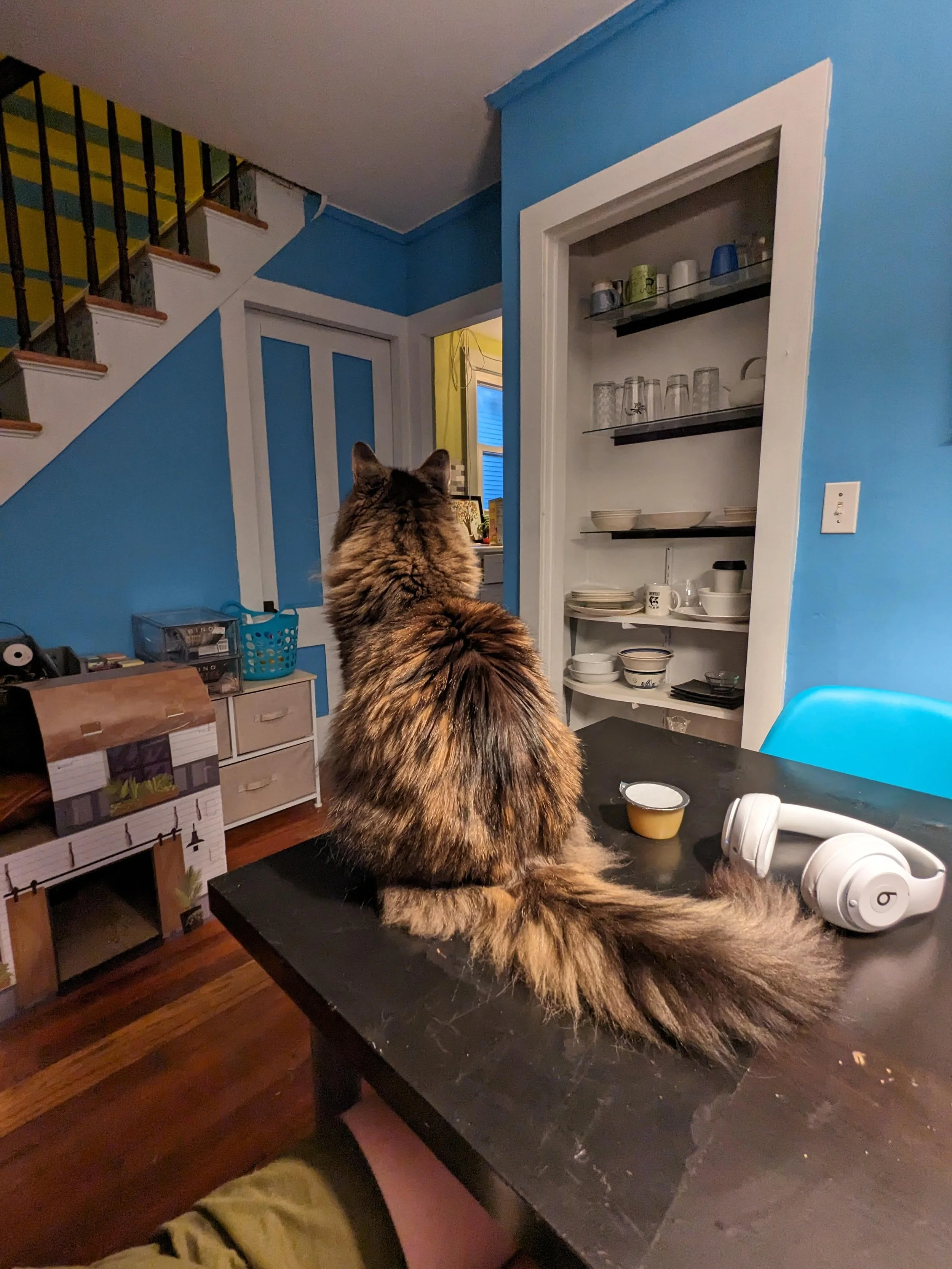
He took his position as only-cat very very seriously. He made sure to sit in cupboards, on dishes, and try to escape out the back door into the garden at every opportunity. He sought out unsuspecting laps and laptops and helped himself to what he considered a generous salad bar, and my roommate considered her houseplants.
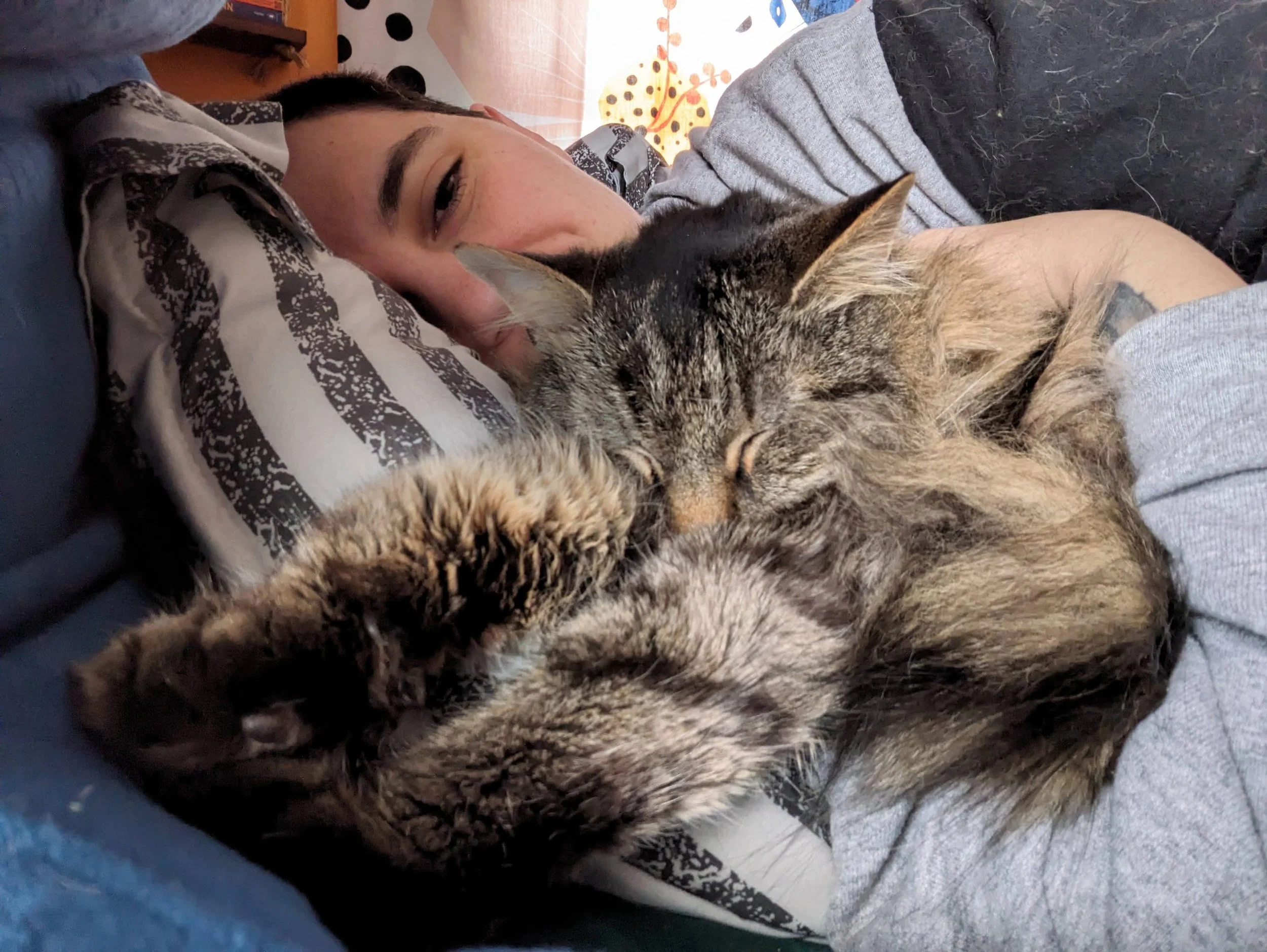
Every night, I would fall asleep with Finnick snuggled against my head. Every morning, I would wake up with him tucked against me. The easy morning snuggles were an amazing way to wake up with very little adrenaline. He was also there if I woke from nightmares. And that is a detail I find fascinating, because after a few months, my roommate relayed her routine with him.
She is a true night owl and occasional insomniac. After I fell asleep, apparently Finnick would get up and go to her room where he would lounge with her. Eventually, at a point he determined to be appropriate, he would bully her into going to bed and cuddling him. He managed this through sheer persistence and force of will, and was often successful. He would cuddle her and purr and relax until he was satisfied; and then would do god knows what until I woke up with him next to me.
He had his own little life, friendships, and routines outside of me. He provided a connection point between me and my roommates in a way I could never have organically developed while I only had energy to sleep and work.
While I am still good friends with my old roommate, and we still talk, more effort is involved now that our shared love has died.
Grief is sticky and weird. Even when it is shared.
Sometimes, things get really bad.
Mental illness sure, but also environment, systems of oppression, loss, rejection, overwhelm, chronic pain, difficulty accessing basic needs and then there’s a moment. A decision, made from despair, desperation, or need for relief.
But for many of us, suicidal ideation is a part of our lives not just contained to individual those stories and moments.
And that is really uncomfortable to acknowledge. It’s difficult to share for fear of being seen as unstable, dramatic; or for fear of reinforcing the old narrative of being selfish, a failure and bad.
I am hopeful that as I continue to learn how to identify my own warning signs, understand and work against the systems in place that make suicide a relief, and learn how to give, receive, and connect with others- that there will not be another attempt.
But for me, this isn’t something that goes away completely.
It's more like volume. The concept first entered my consciousness at four years old, and it remains with me now. Sometimes it is loud, other times barely audible, but almost always playing.
I am developing more skills, seeing professionals regularly and have a community of friends who I can talk to about my thoughts when they go a bit haywire. But I know how scary it is to feel defective. I know what it is like to believe I exist wrongly. And I know what it’s like to sit in that uncomfortable position where I don’t want to die, but I also don’t exactly want to live either. And Finnick and The Dogs supported me in those in between spaces.
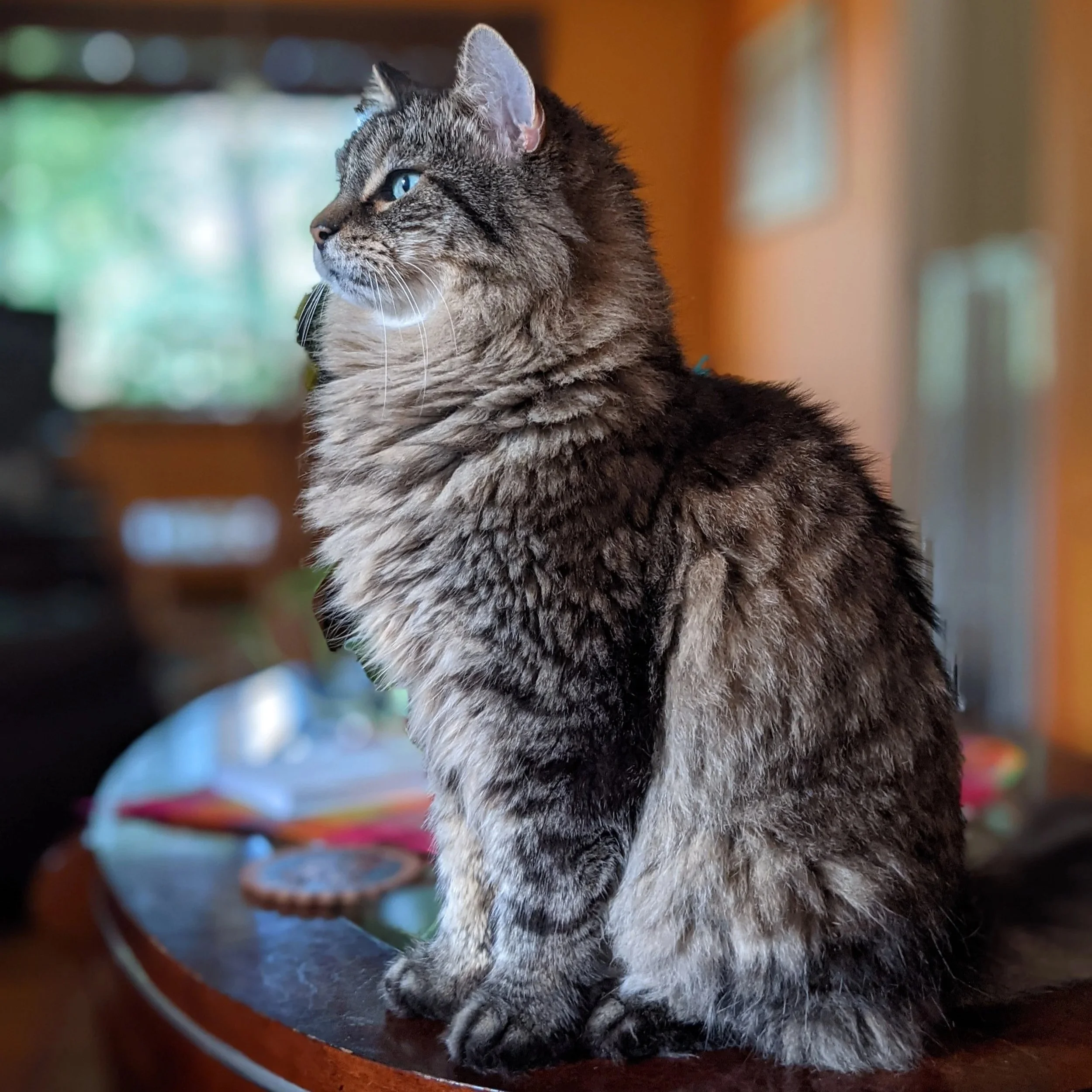
Finnick was grounding.
He was an anchor, firmly keeping me established in the present.
In the end, Finnick was just as close to me as Yadi was.
And while I’d had a few months to come to terms with Yadi’s passing, Finnick went from “Oh, he’s lost a lot of weight” to “oh it’s stomach cancer” really really quickly. There was no time to reconcile with the fact that he was sick. No time to prepare for his leaving. We had to say goodbye, we had to say it fast, and we had to say it while I was still envisioning a future with him.
He and Wibble had matching bow ties to wear at the airport for our international move.
And then he was gone.
I knew Finnick helped keep me alive after one suicide attempt. What I didn’t know was how instrumental he had been in preventing other plans from forming. His companionship, routines, and his stabilization through purring and light pressure. Connection to him as another creature, connection to other humans. All of this helped me manage my stress, remember to take my meds and more. His absence is an enormous grief. And so is the absence of the coping skills we were engaging in. I am not going to lie, it has been hard without him. The stress is high, my brain is searching for ways to calm down and for about 30 years, having an exit strategy in the back of my mind felt safe. I didn’t realize until he was gone how much I find myself reaching for those old patterns of thought. Again, for clarity, I have no intention of shuffling off this mortal coil, and I’m getting a lot better at finding other tools at my disposal. But I miss this cat.
I miss him. I miss his company and his humor and his antics. And I also miss the impact he had on my ability to get through the day. He was effective. And now, without him, I’ve found myself scrambling for a grounding mechanism or two to match him.
Our animals frequently provide connection to the outside world. Yadi had friends at the park across the street who I stopped seeing after his death. Rehoming Eugene and Haymitch meant no more group walks.
If I were a single pet household, that means I’m no longer seeing a vet, groomer, pet food clerk, neighbors on walks or at dog parks. Small talk and sharing stories changes, tinged with the loss. All those micro connections with other humans either vanish, or become heavy with awkwardness in a culture that doesn’t know how to hold room for mourning.
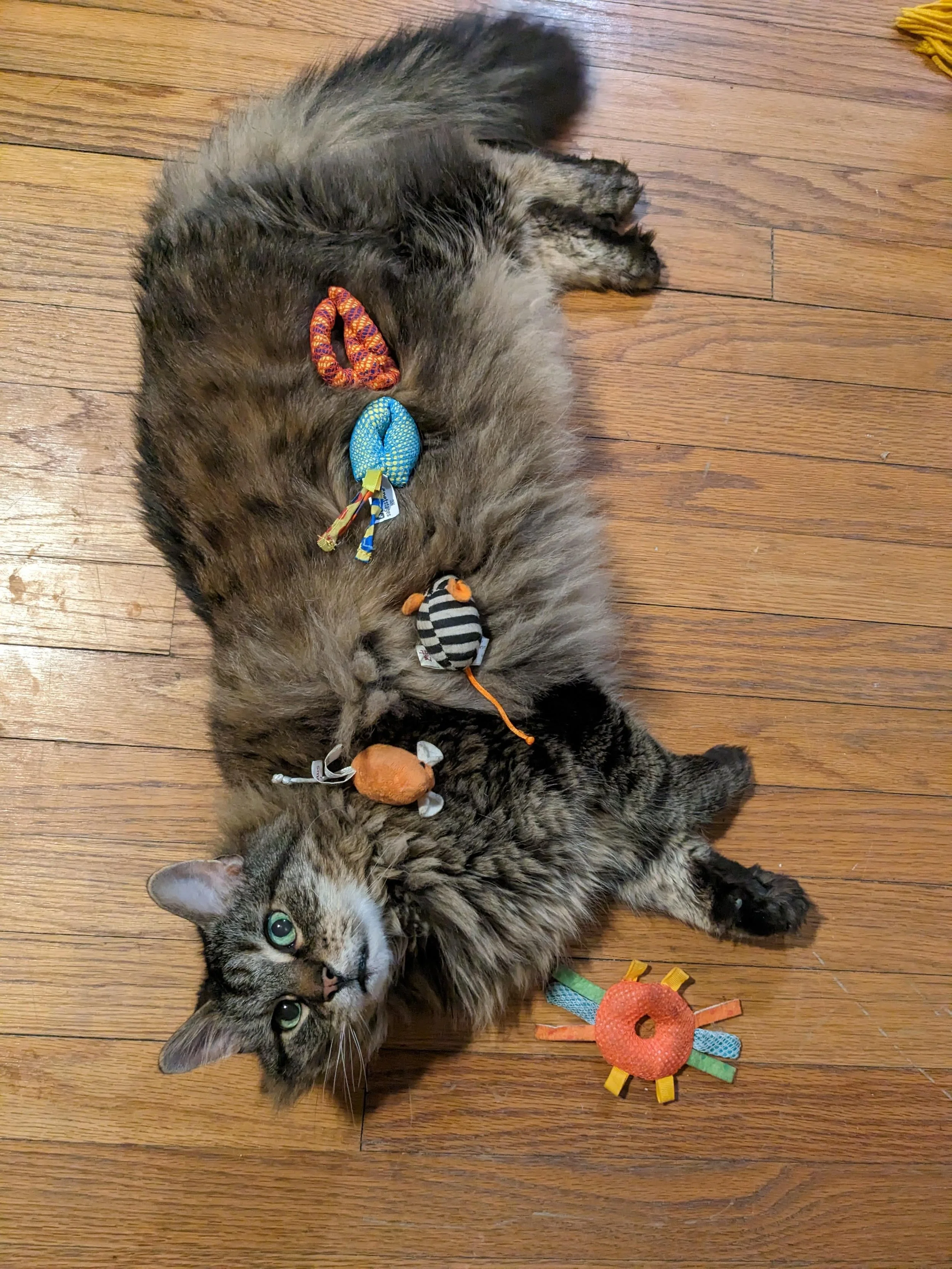
Our pets can help us regulate, provide companionship and comfort
But they also provide connections to other humans that are at risk of abruptly disappearing upon their death, leaving us bereaved and doubly alone.
Companion animals are important. They matter. Their loss matters.
And additionally, you, reader, also matter. No matter what the brain worms, family, gods, or society may say. I’m glad you’re here, for as long as you want to be.
You are not a failure, and you and your pet’s story deserves to be heard.
Finnick would have loved to sit with us as we talked; purring, investigating our drinks, trying to steal any snacks. Hoping to bully us into taking him into the back garden. In honor of him, in honor of you - if you have a story to share; I would love to hear, to laugh, to commiserate, to grieve with you.
Love,
Max